School Support
School Support
Filters
Filters
When a student is overwhelmed, the adults supporting them need more than good intentions—they need practical strategies they can access in the moment.
The PDA Educator Support Pack gives teachers, education assistants, relief staff and student support teams clear, everyday guidance for supporting students who experience demand avoidance, anxiety or a strong need for autonomy.
Instead of treating avoidance as defiance or focusing on compliance, this pack helps educators recognise what may be happening beneath the behaviour and respond in ways that reduce pressure, protect connection and build trust.
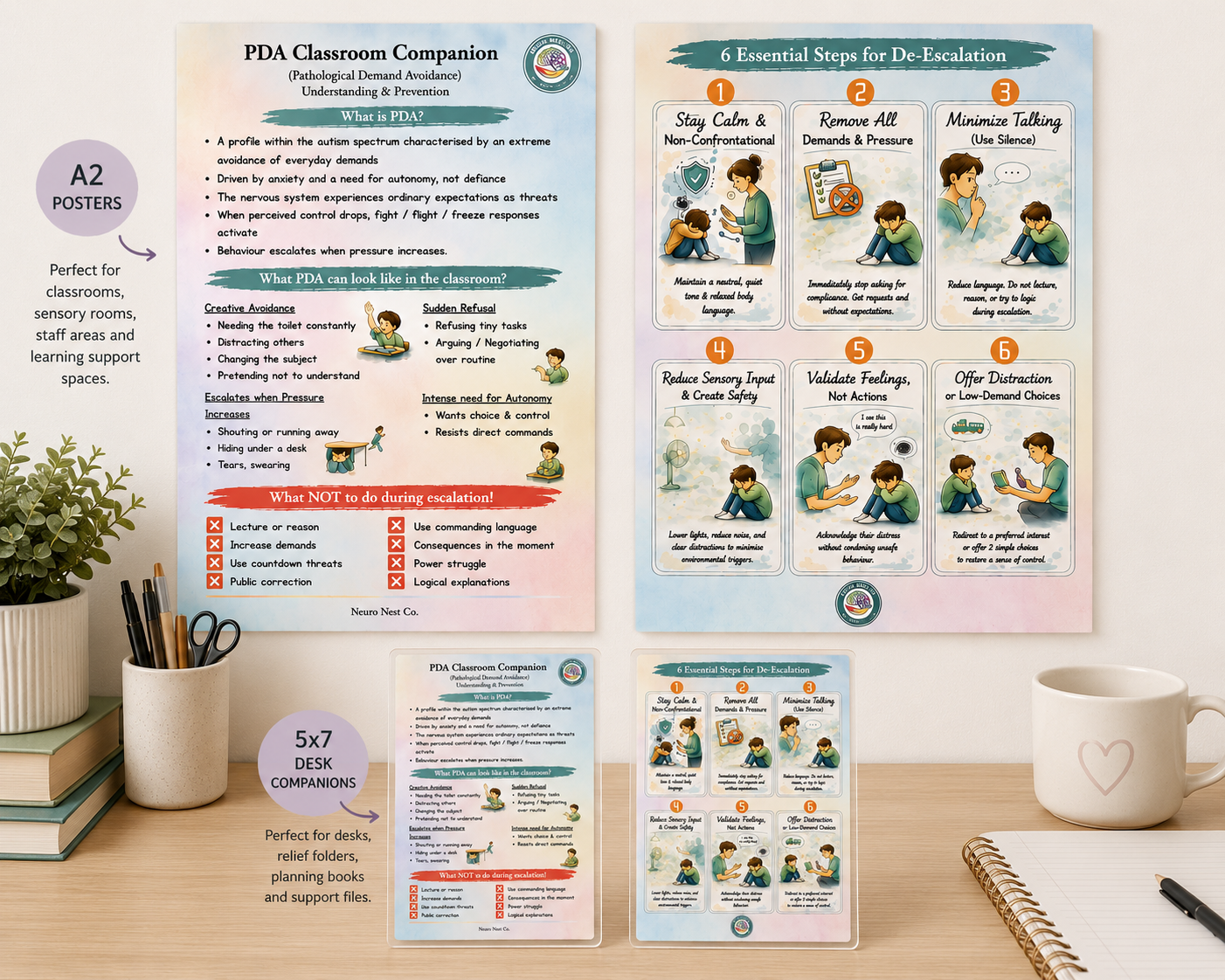
The large classroom posters keep essential strategies visible and easy to follow, while the matching desk companions give staff a quick-reference tool they can keep close by. This helps create a more consistent approach across teachers, education assistants, relief staff and support spaces—so the student isn’t expected to adjust to a completely different response from every adult.
What’s Included
🧠 A2 Classroom Support Poster
A practical classroom guide featuring supportive communication strategies, helpful approaches and key reminders for reducing demand pressure and building trust with PDA and demand-sensitive students.
💜 A2 “6 Essential Steps for De-escalation” Poster
A clear, easy-to-follow visual guide for supporting a student during moments of overwhelm or escalating distress. Ideal for classrooms, wellbeing spaces, support rooms and staff areas.
📖 2 Matching Double-Sided Desk Companions
The Classroom Support Guide on one side and the 6 Essential Steps for De-escalation on the other. Perfect for teacher desks, relief teacher folders, learning support offices, wellbeing teams and individual student support files.
This Pack Can Help Educators
Better understand demand avoidance and the need beneath the behaviour
Reduce unnecessary pressure within everyday classroom interactions
Use more collaborative and autonomy-supportive communication
Respond more consistently during moments of overwhelm
Support de-escalation without adding further demands
Build greater trust, safety and connection with students
Give relief staff and support teams immediate access to key strategies
Ideal For
Classroom teachers
Education assistants
Relief and substitute teachers
Learning support teams
Wellbeing and regulation spaces
Individual student support files
Schools supporting PDA or demand-sensitive students
Practical strategies. Clear reminders. More consistent support.
Because when every adult understands how to reduce pressure and respond supportively, the student no longer has to start from scratch with every person they encounter.


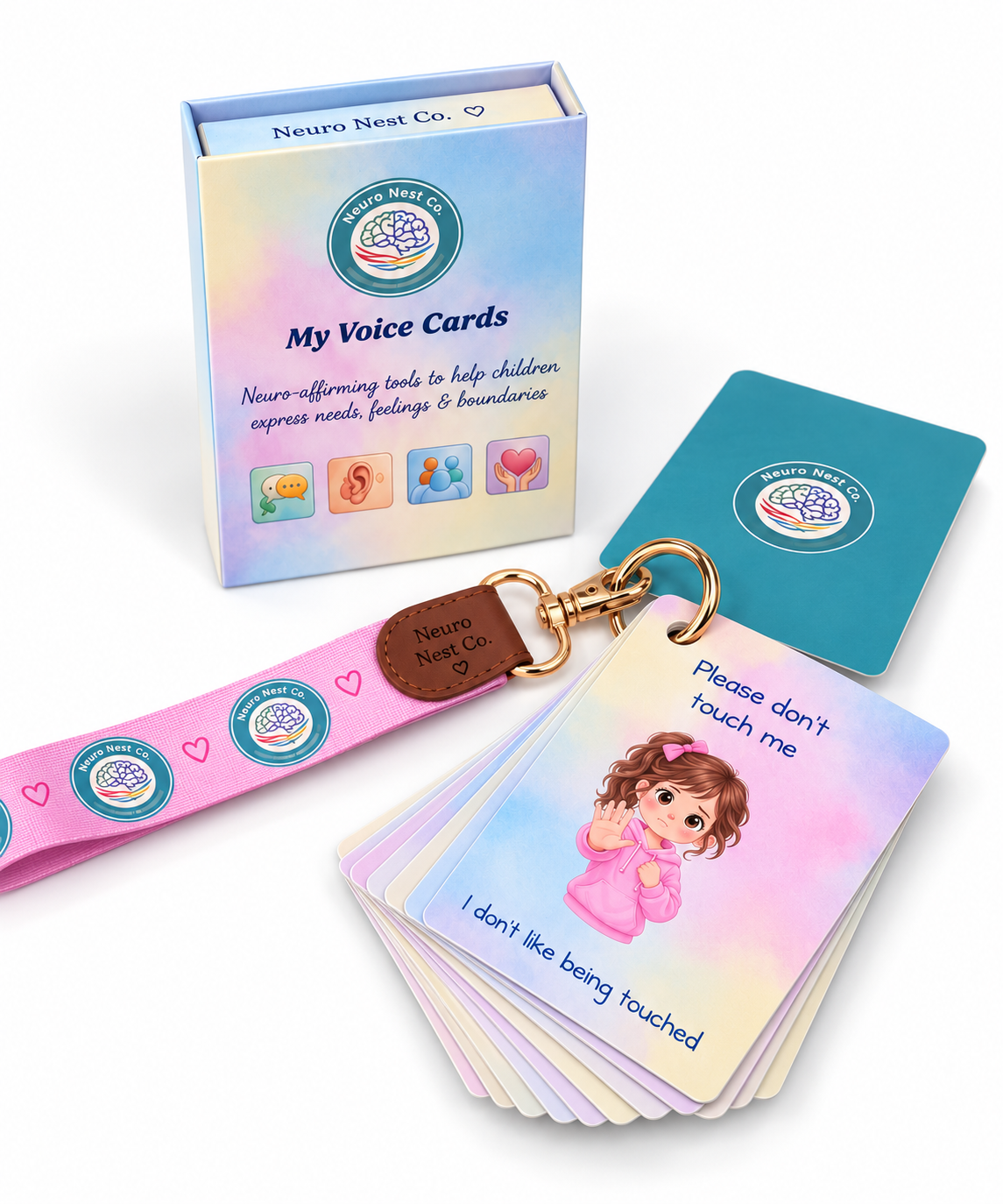
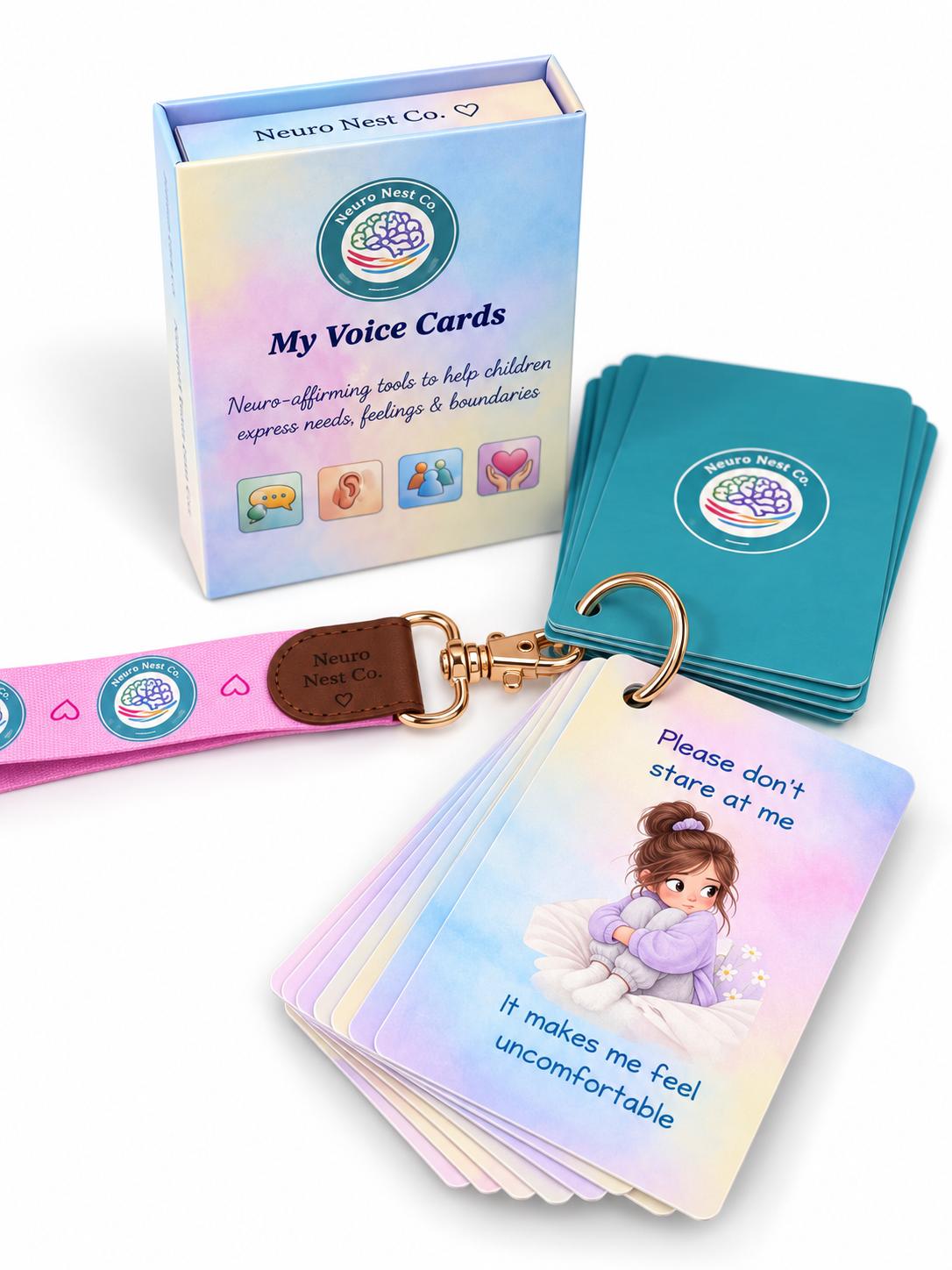
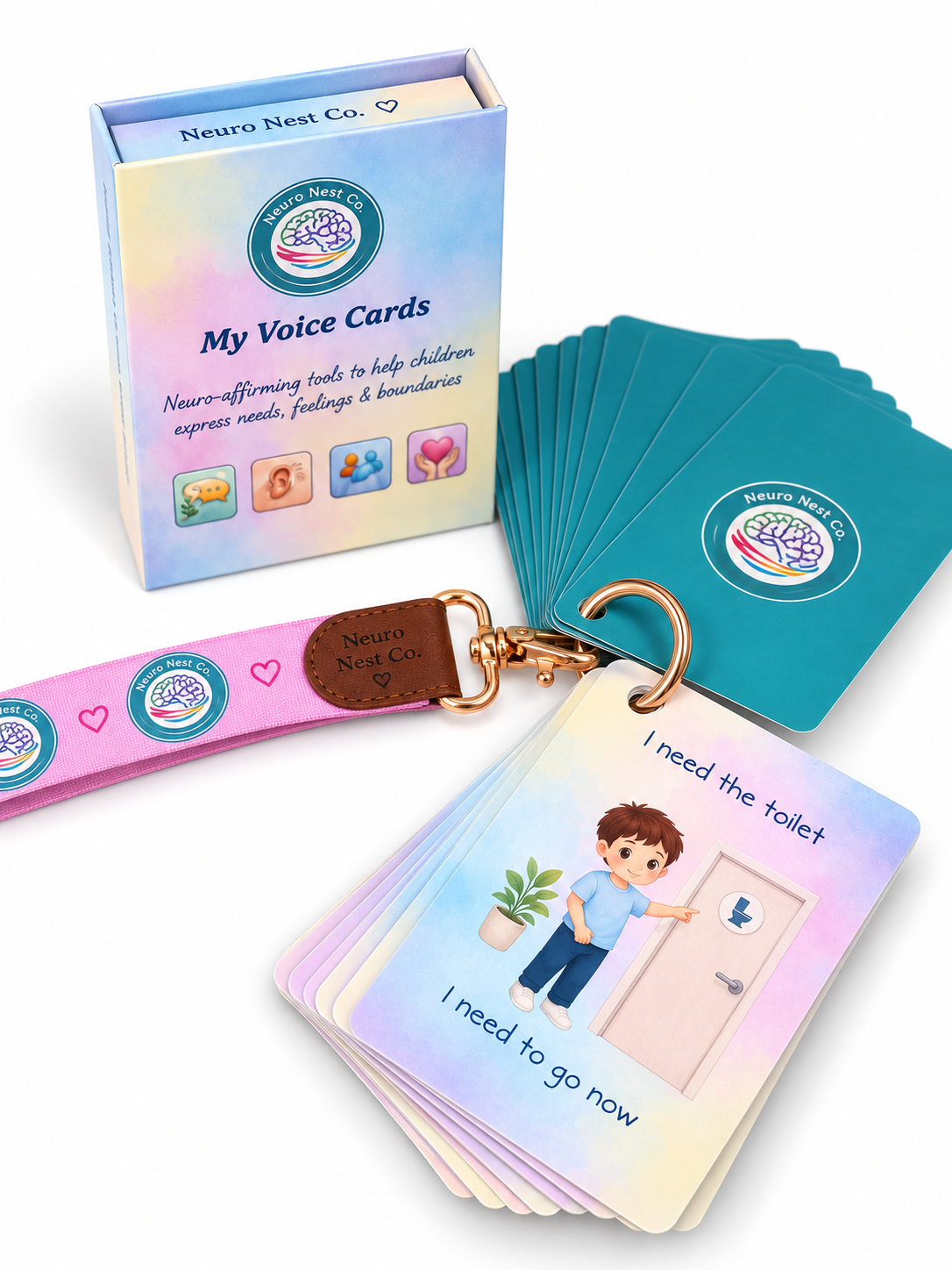
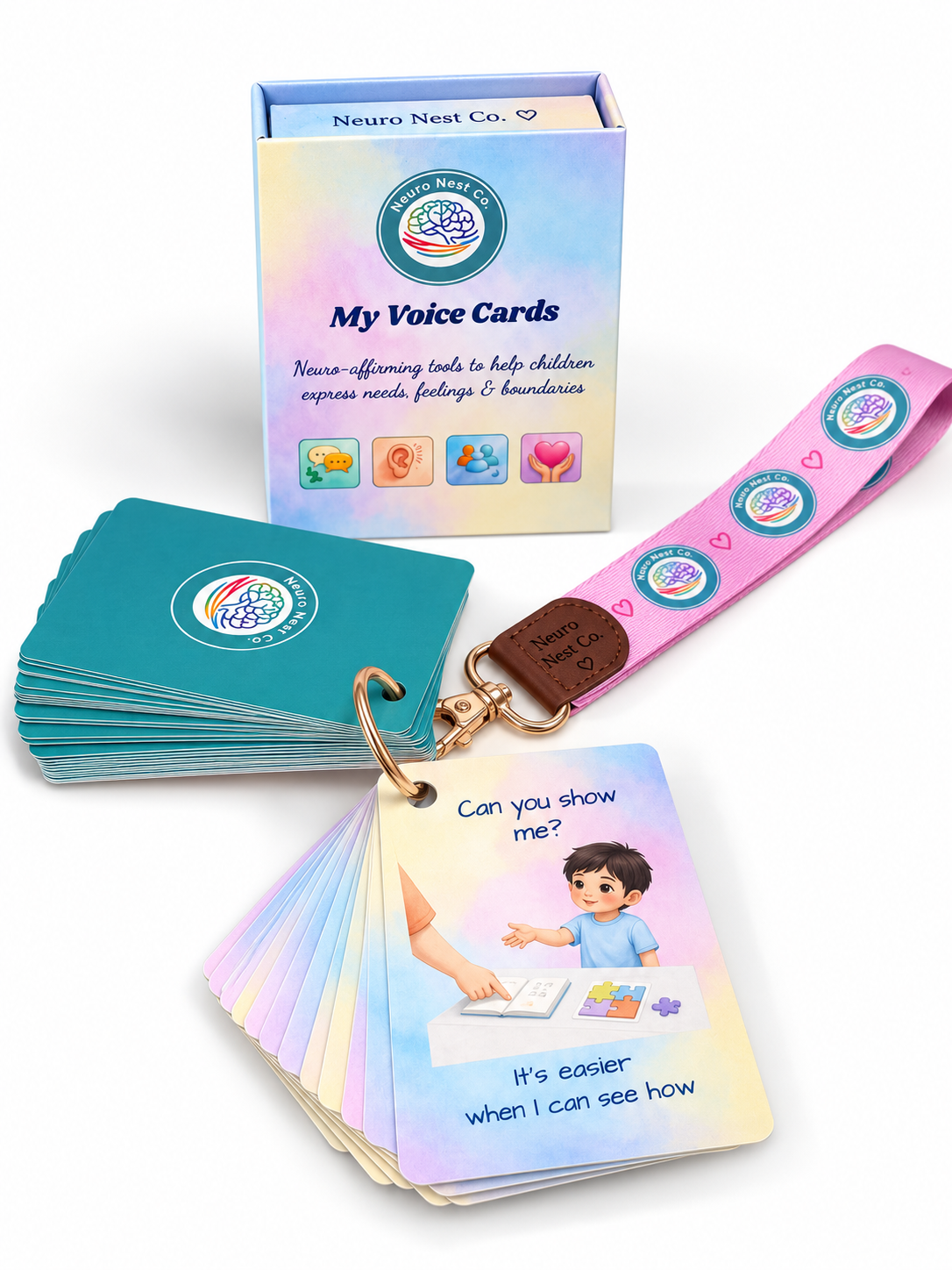
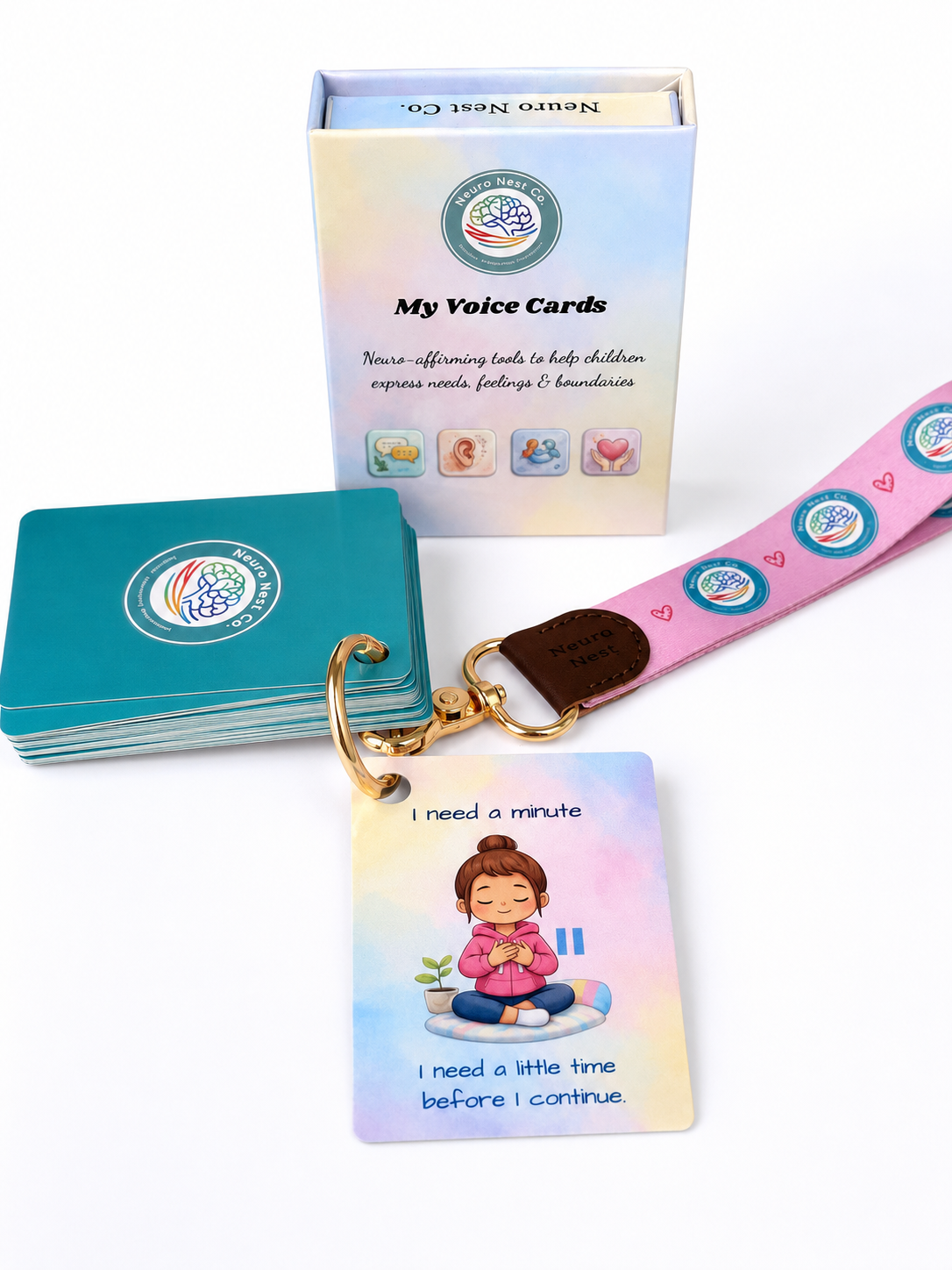
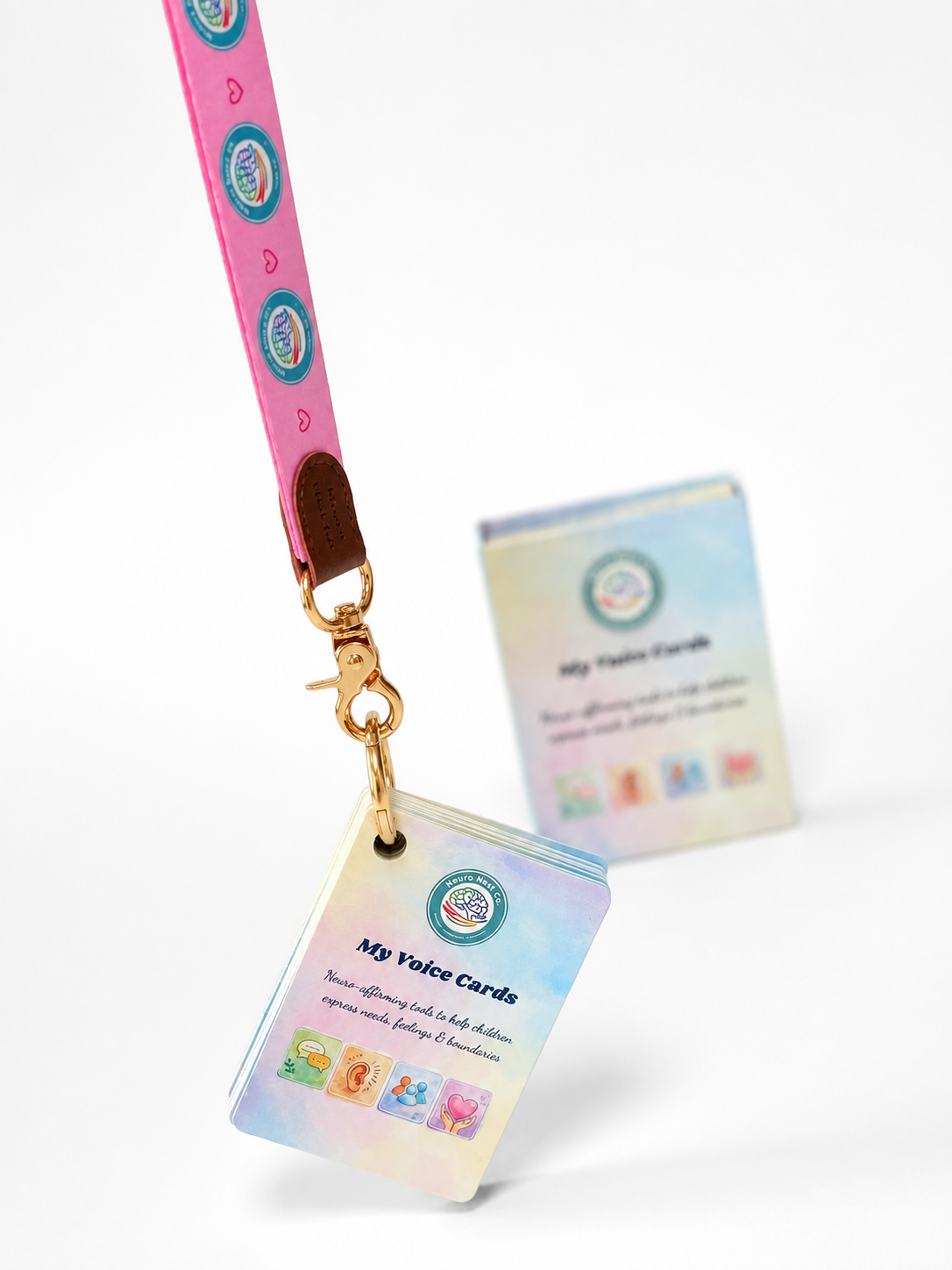
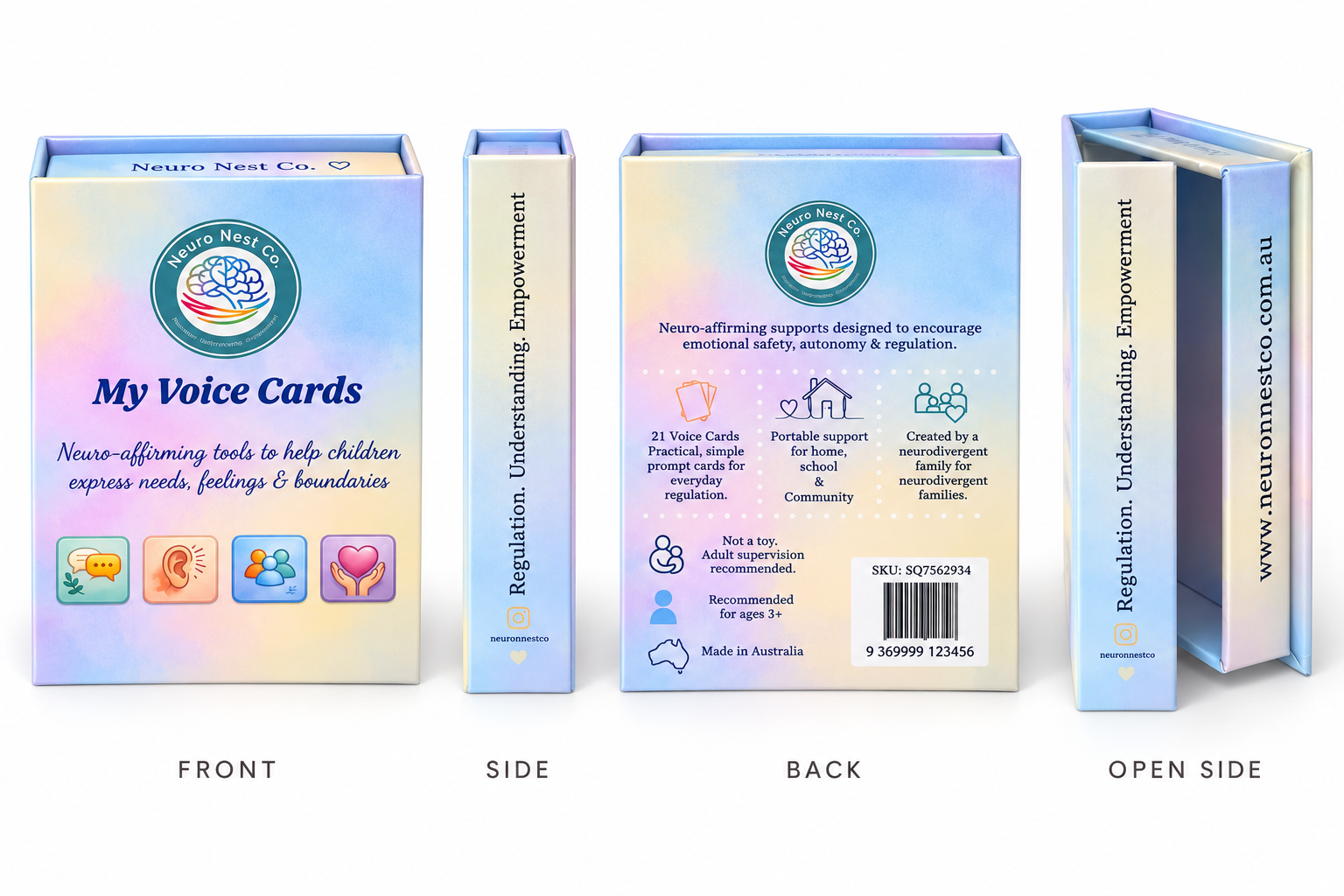
When words are hard, they still deserve a way to be heard.
Sometimes a child knows exactly what they need — but saying it out loud feels impossible.
They might be overwhelmed, dysregulated, frustrated, anxious, shut down or simply unable to find the words in that moment.
And sometimes, the more we ask…
“What’s wrong?”
“What do you need?”
“Can you tell me?”
…the harder it becomes.
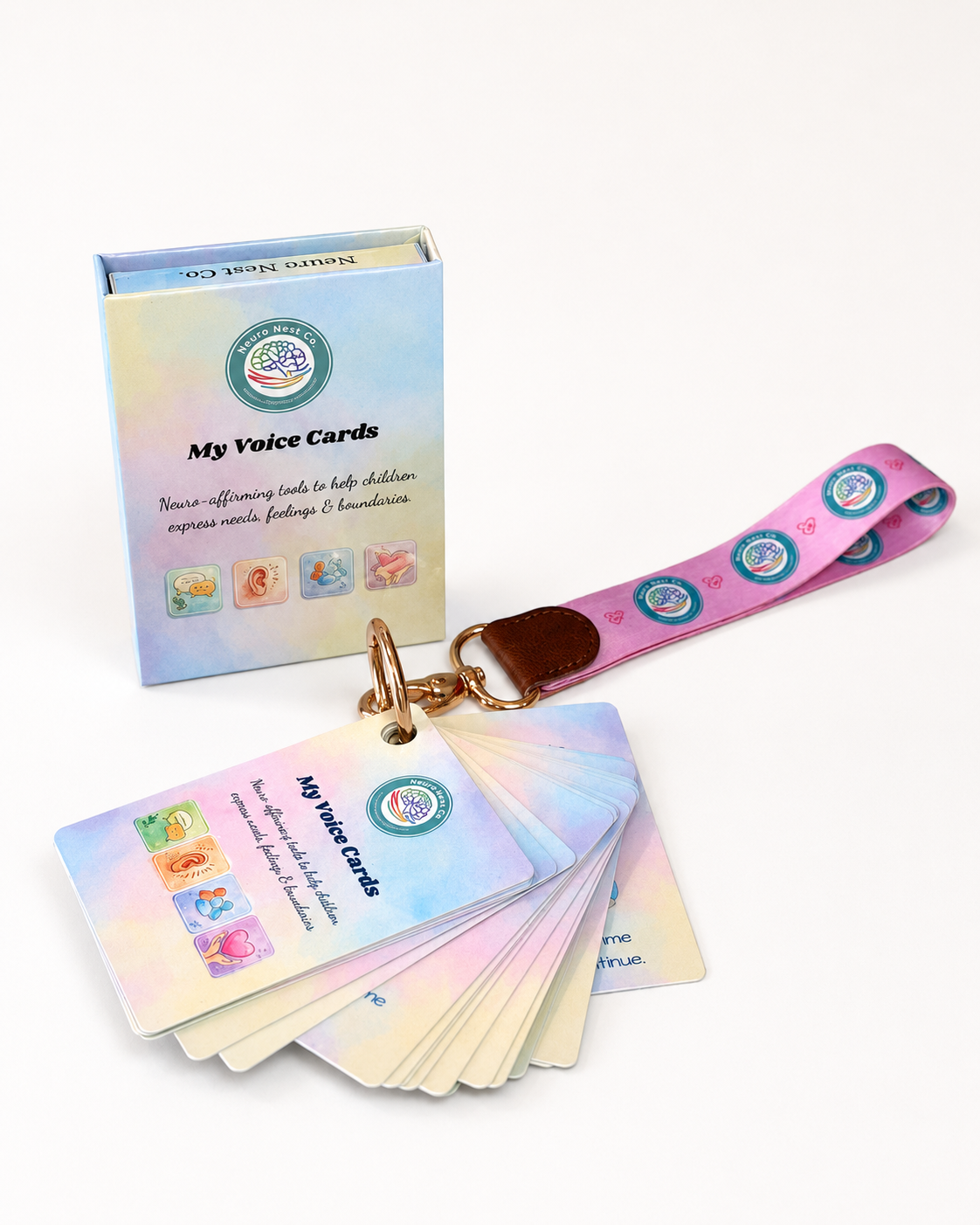
My Voice Cards give children another way to communicate without needing to explain everything verbally.
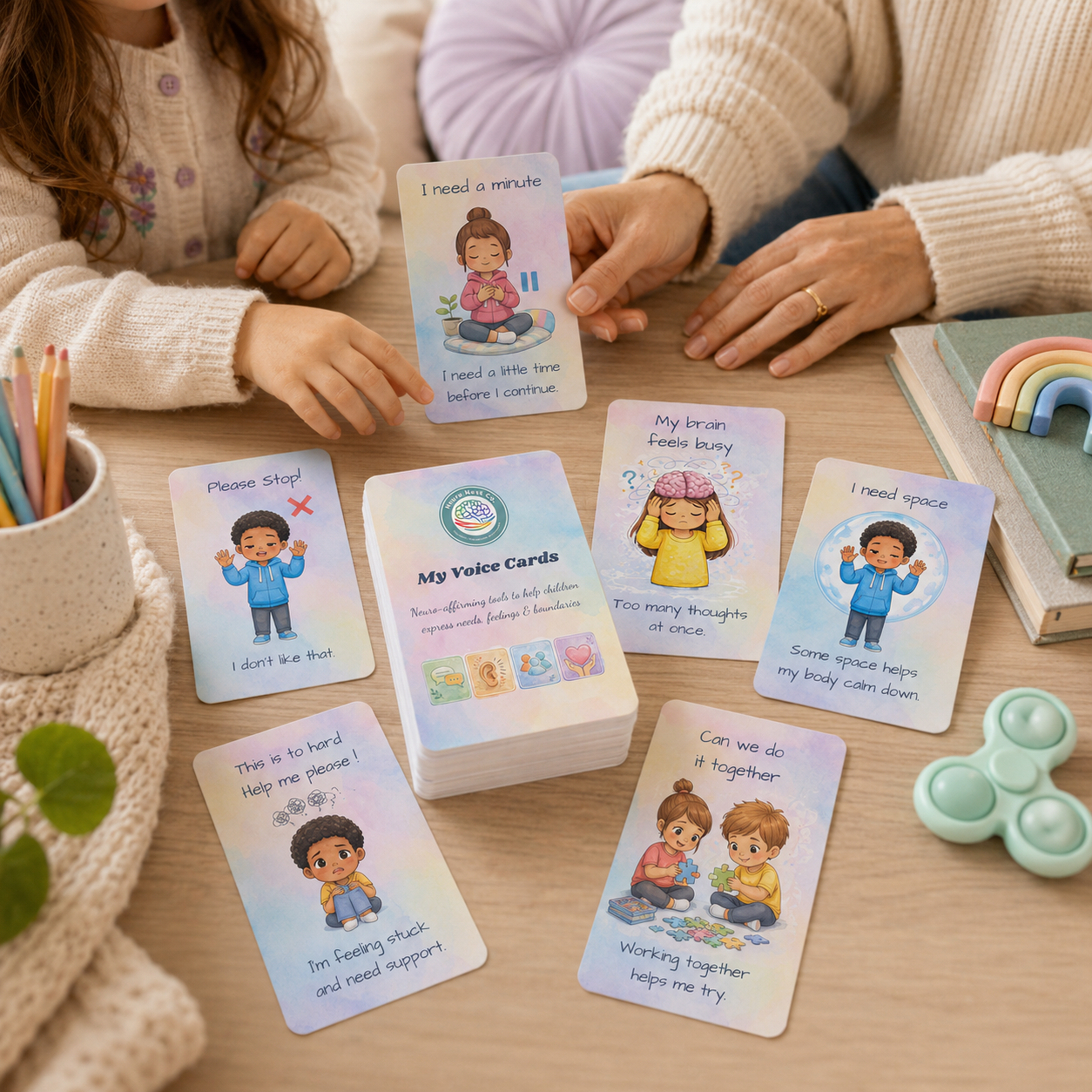
Designed with Autistic children, children with ADHD and other neurodivergent children in mind, this set allows a child to choose or show a card that communicates what they need, how they’re feeling or what they’re trying to tell you.
Instead of requiring more words in an already overwhelming moment, they can simply show you.
Cards Include Messages Such As:
I need a break.
I need help.
I need more time.
I’m not ready yet.
I don’t know.
I need space.
It’s too loud.
Please stop.
I can’t talk right now.
Can you stay with me?
And other practical messages designed for real-life moments when verbal communication may be difficult.
Why My Voice Cards?
Communication isn't only spoken words.
For some children, verbal communication can become harder during overwhelm, stress, sensory overload, transitions or moments of dysregulation.
Having another communication option can give a child a way to express themselves without being repeatedly questioned or pressured to speak.
The cards can also help the adults around them understand what the child is communicating and respond with greater clarity and compassion.
Designed for Real Life
My Voice Cards can be used:
At home.
At school.
During therapy.
In the community.
During transitions.
In sensory-overwhelming environments.
Anywhere a child may benefit from having another way to communicate.
They can be kept together as a set, carried on a lanyard or made easily accessible wherever your child needs them most.
Who They’re For
Suitable for Autistic children, children with ADHD and other neurodivergent children who may experience difficulty communicating their needs verbally at times.
They can be used by families, educators, support workers, occupational therapists, speech pathologists, psychologists and other professionals supporting neurodivergent children.
Product Details
Set of 27 communication support cards.
Approx. 85 × 55 mm each.
Portable and easy to keep accessible.
Designed using clear, low-demand language.
Created for use across home, school, therapy and community settings.
Because “I can’t tell you right now” should never mean “I don’t have anything to say.”
My Voice Cards give children another way to have their voice heard. 🩵
Disclaimer: My Voice Cards are an educational communication support resource and are not intended to provide medical, psychological, therapeutic or diagnostic advice. They are not a replacement for individualised assessment, communication supports or advice from a qualified health or allied health professional. Communication needs vary between children, and no single communication method will be appropriate for every child.
© 2026 Neuro Nest Co. All rights reserved. No part of this publication may be reproduced, stored in a retrieval system, or transmitted in any form or by any means without prior written permission from Neuro Nest Co.


You know you need to reduce the pressure.
You know direct demands can make things harder.
But what are you actually supposed to SAY instead?
That’s exactly where these cards come in.
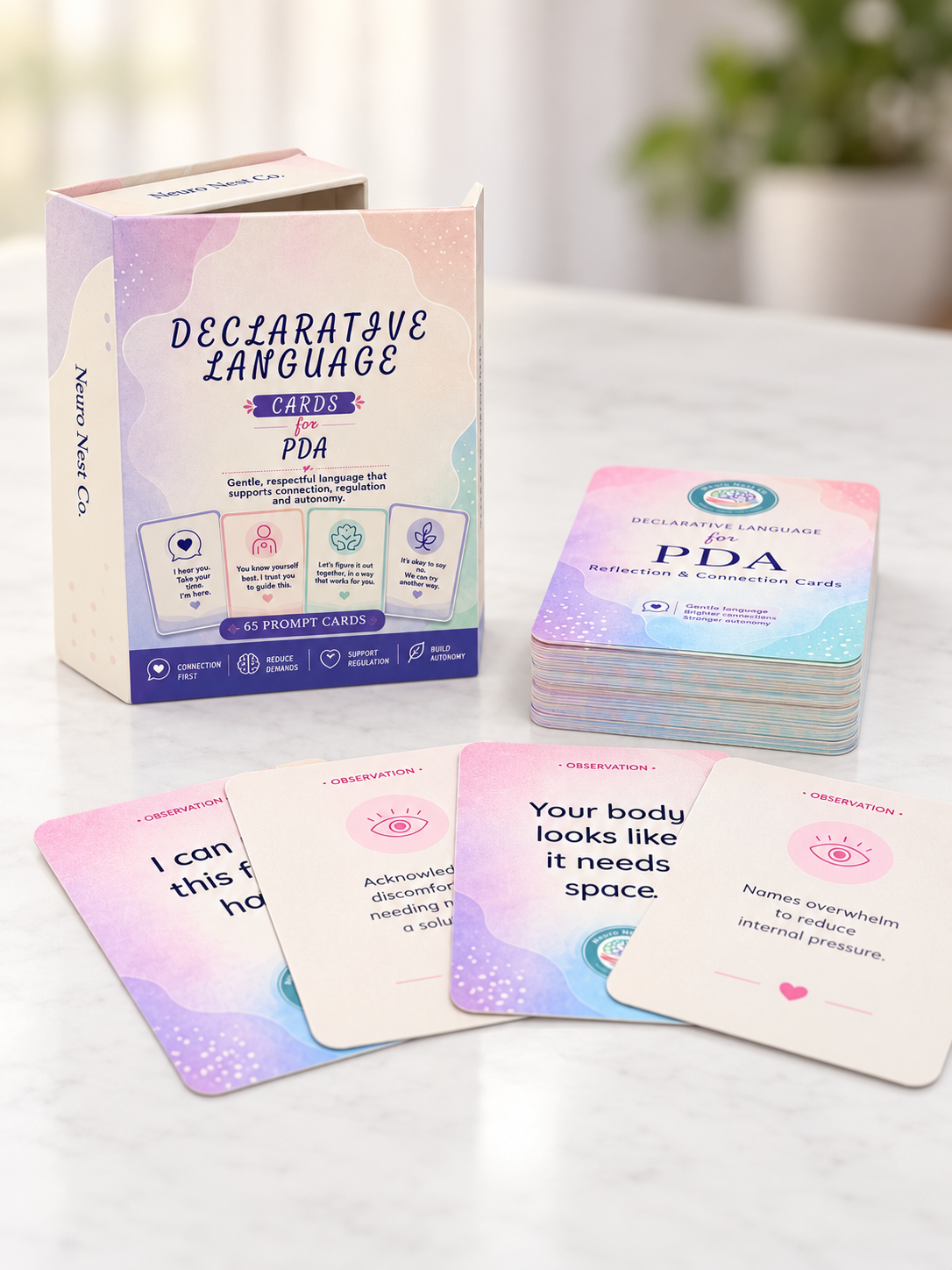
The PDA Declarative Language Prompt Cards are a practical, grab-and-use communication resource designed to help parents, educators and support professionals move away from constant instructions, questions and reminders — and towards language that supports autonomy, collaboration and connection.
Because declarative language isn't simply about swapping one sentence for another.
It’s learning how to communicate differently.
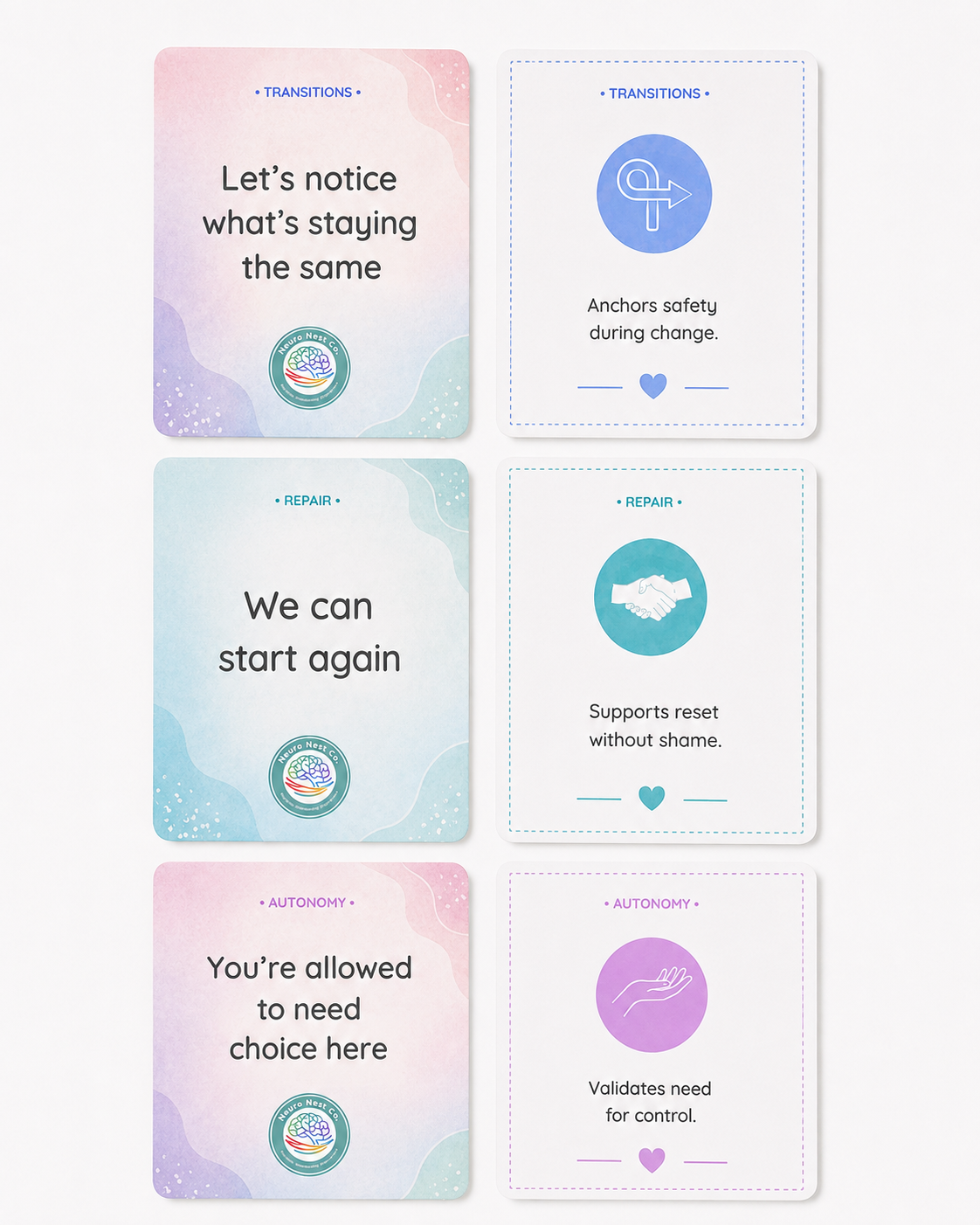
Inside the deck are 65 double-sided cards, each built around real, everyday situations. Rather than giving you a list of phrases to memorise, the cards help you understand what you could say, why it may help, and how you can apply the same approach in other situations.
So when you're standing there thinking:
“I know saying ‘Put your shoes on’ is getting us absolutely nowhere… but what do I say instead?”
You have something practical to reach for.
Each card includes a common everyday situation, a declarative language example, an explanation of why the approach may be helpful, and practical ideas you can start using straight away.
The goal isn't to disguise demands or find a nicer way to get compliance.
It's to help create communication that feels less pressuring, more collaborative and more respectful of autonomy — while giving the adults around the child the confidence to actually use declarative language in real life.
Perfect for home, classrooms, therapy settings and support teams, especially when multiple adults are trying to understand and use the same approach.
Because “use declarative language” is easy advice to give.
Knowing what that actually sounds like at 7:45am when nobody has shoes on is another story.
⸻
Please note: These cards are educational communication resources designed to support learning and everyday interactions.
They are not medical devices and are not intended to diagnose, treat or replace professional advice.
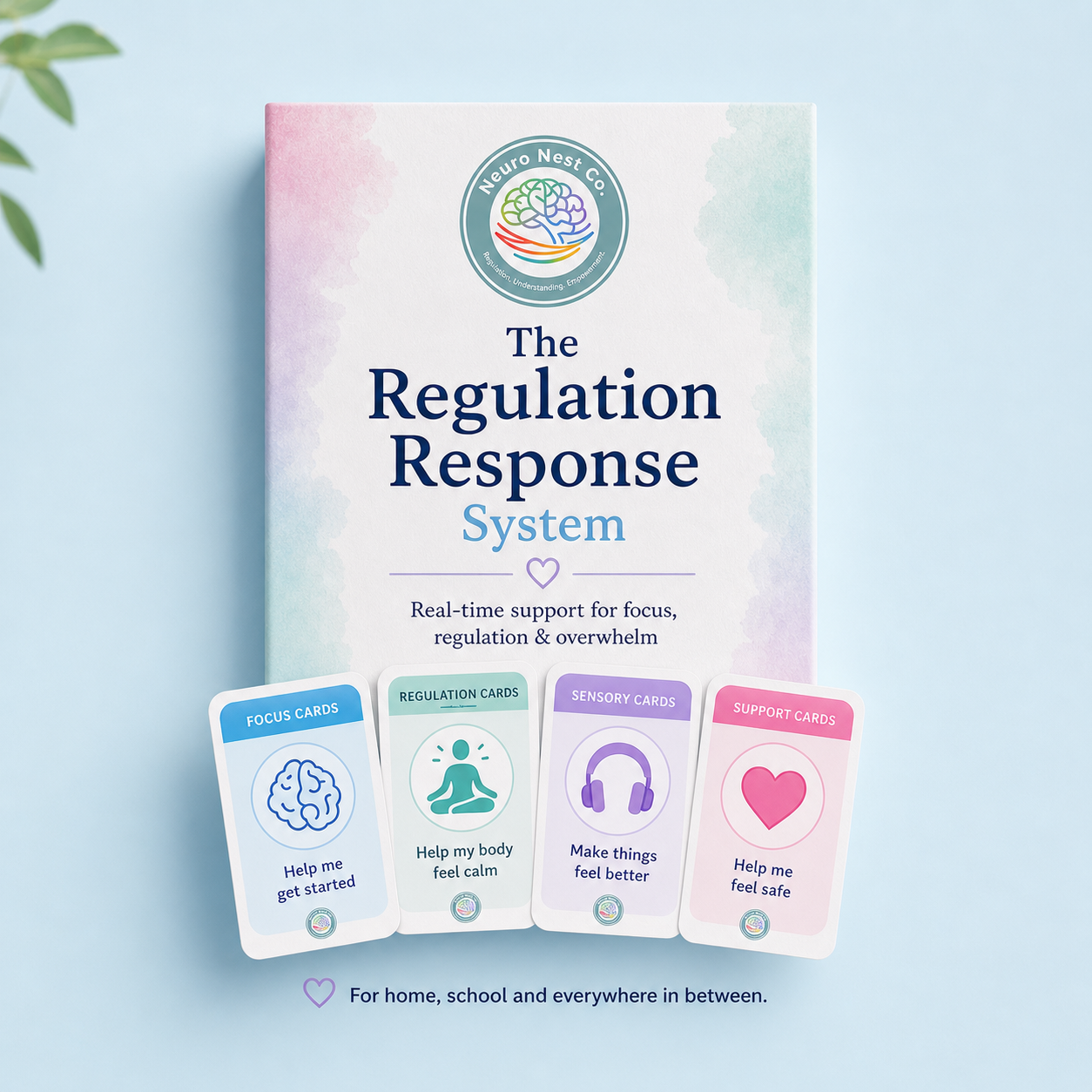
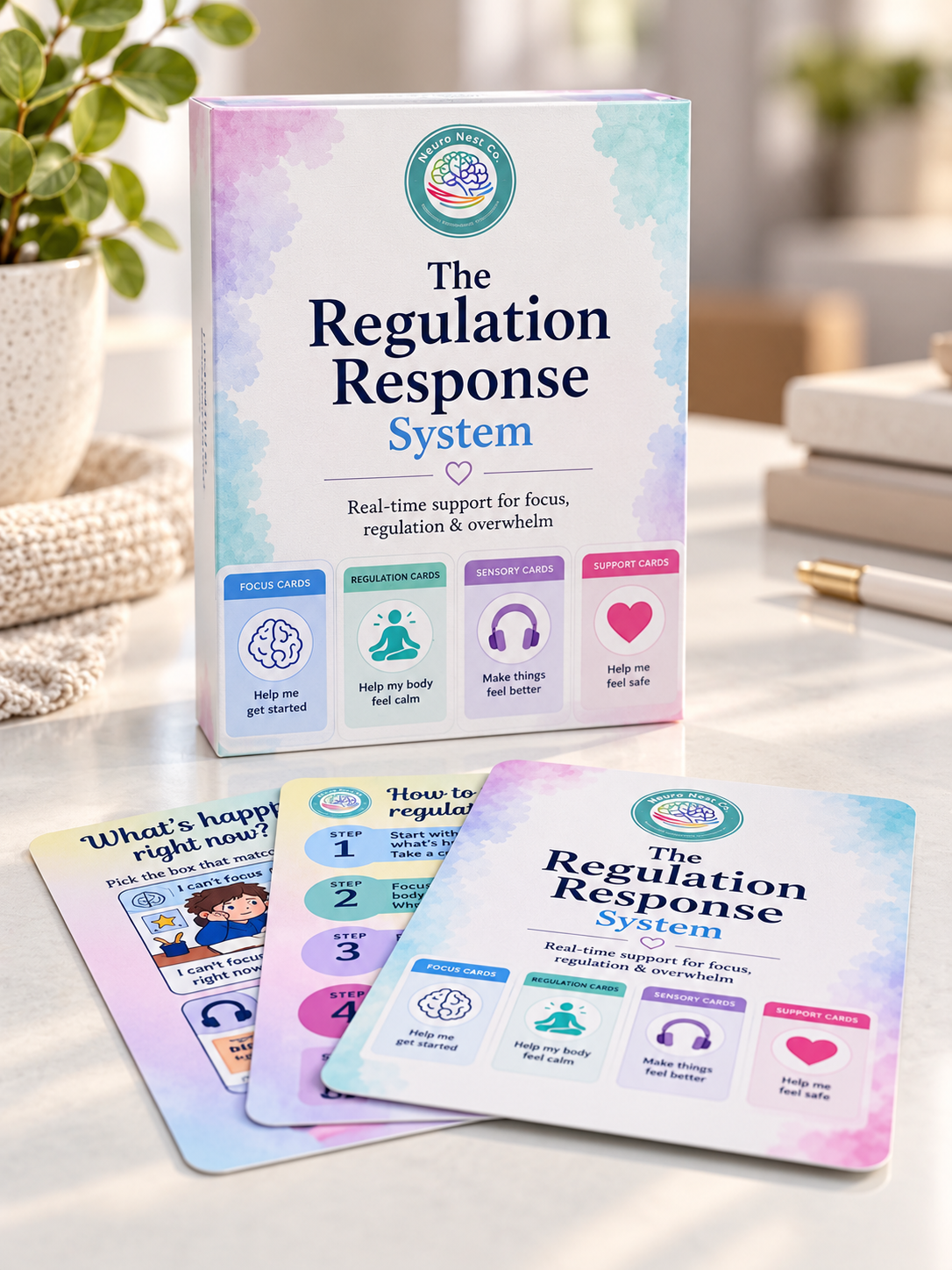
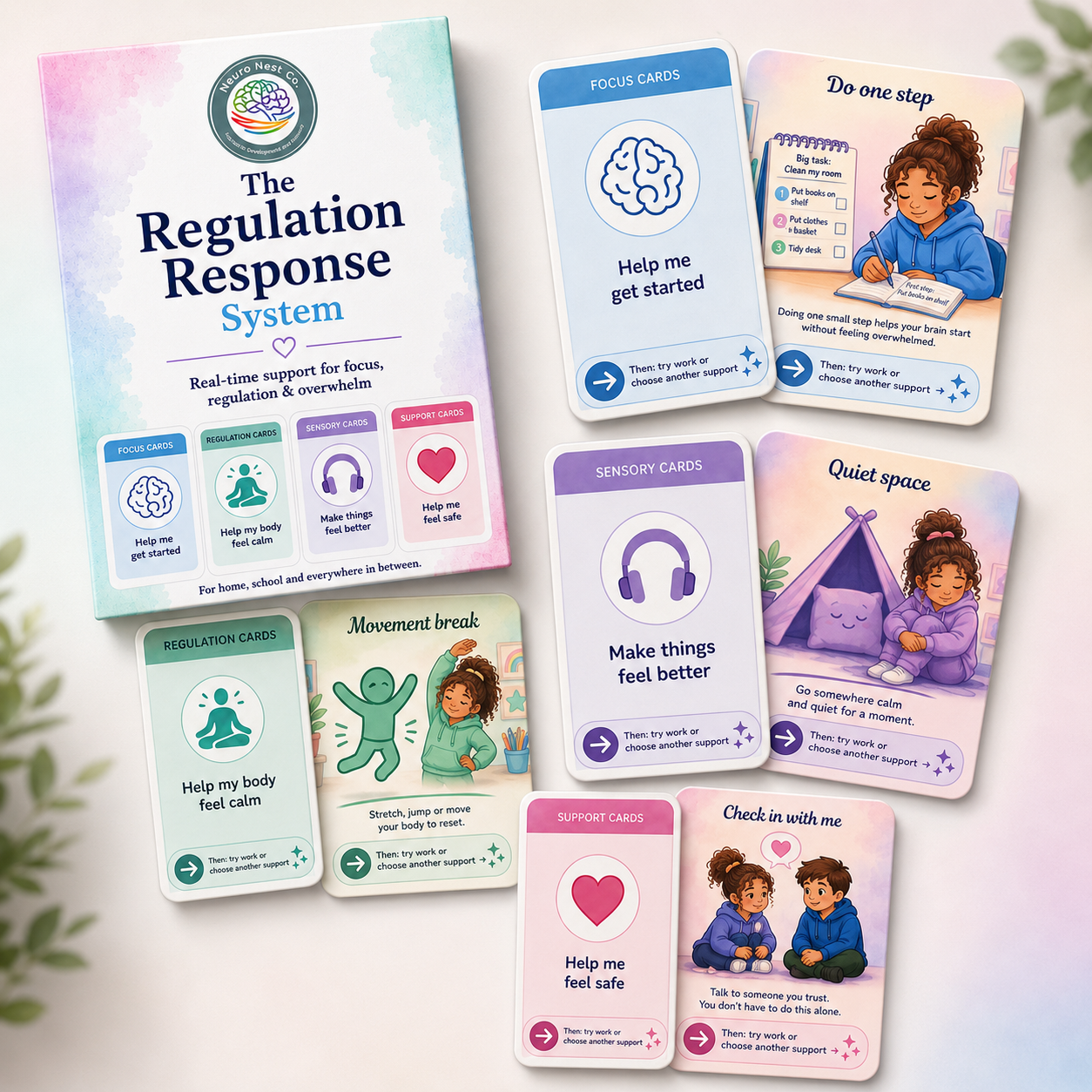
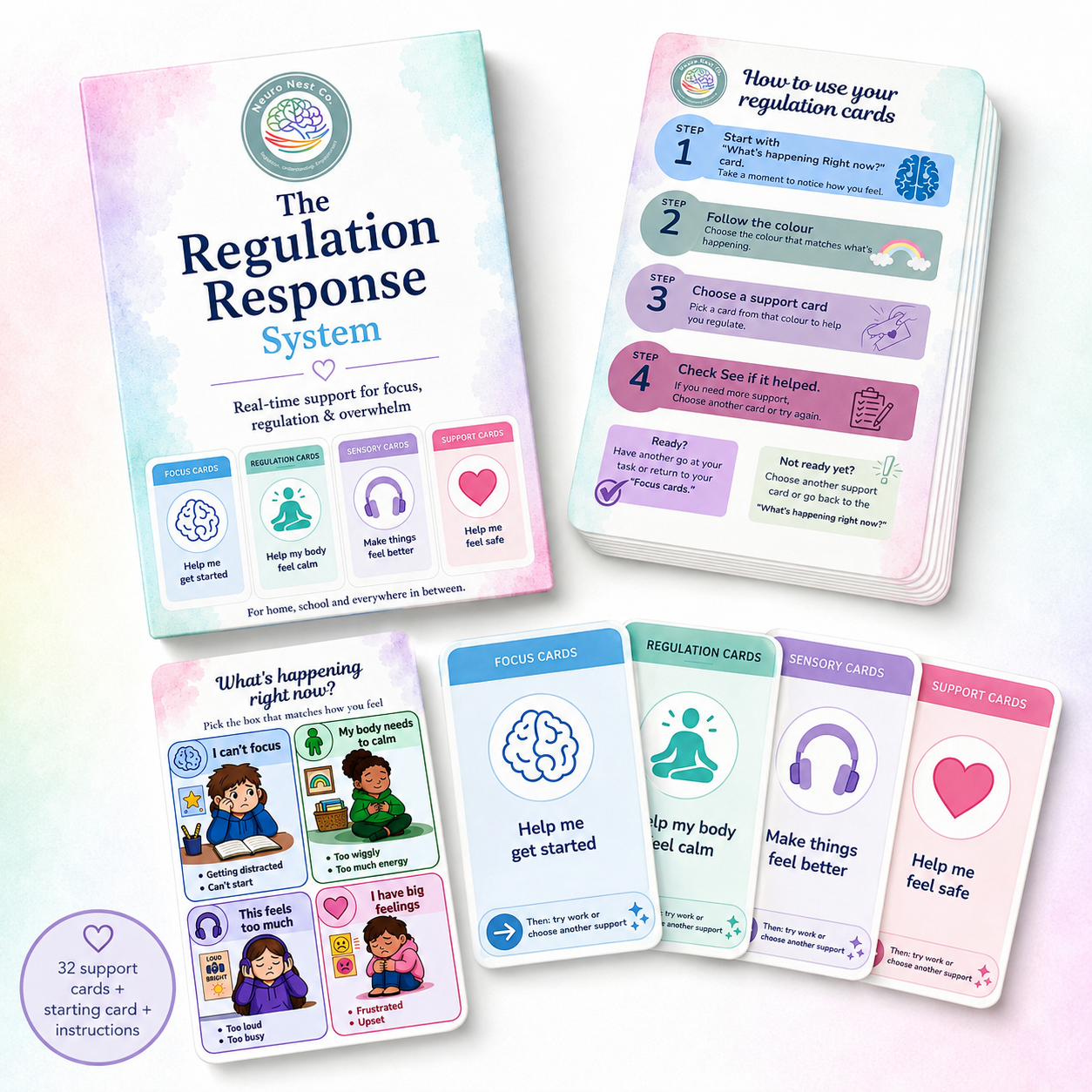
When they know something feels wrong… but don’t know what to do next.
Sometimes a child can feel that everything is becoming too much.
They might feel stuck.
Restless.
Overwhelmed.
Unable to focus.
Unable to get started.
Or they might simply know “something doesn’t feel right” without being able to explain what it is.
And then we ask:
“What’s wrong?”
“What do you need?”
“What would help?”
But answering those questions requires the very skills that may already be difficult to access in that moment.
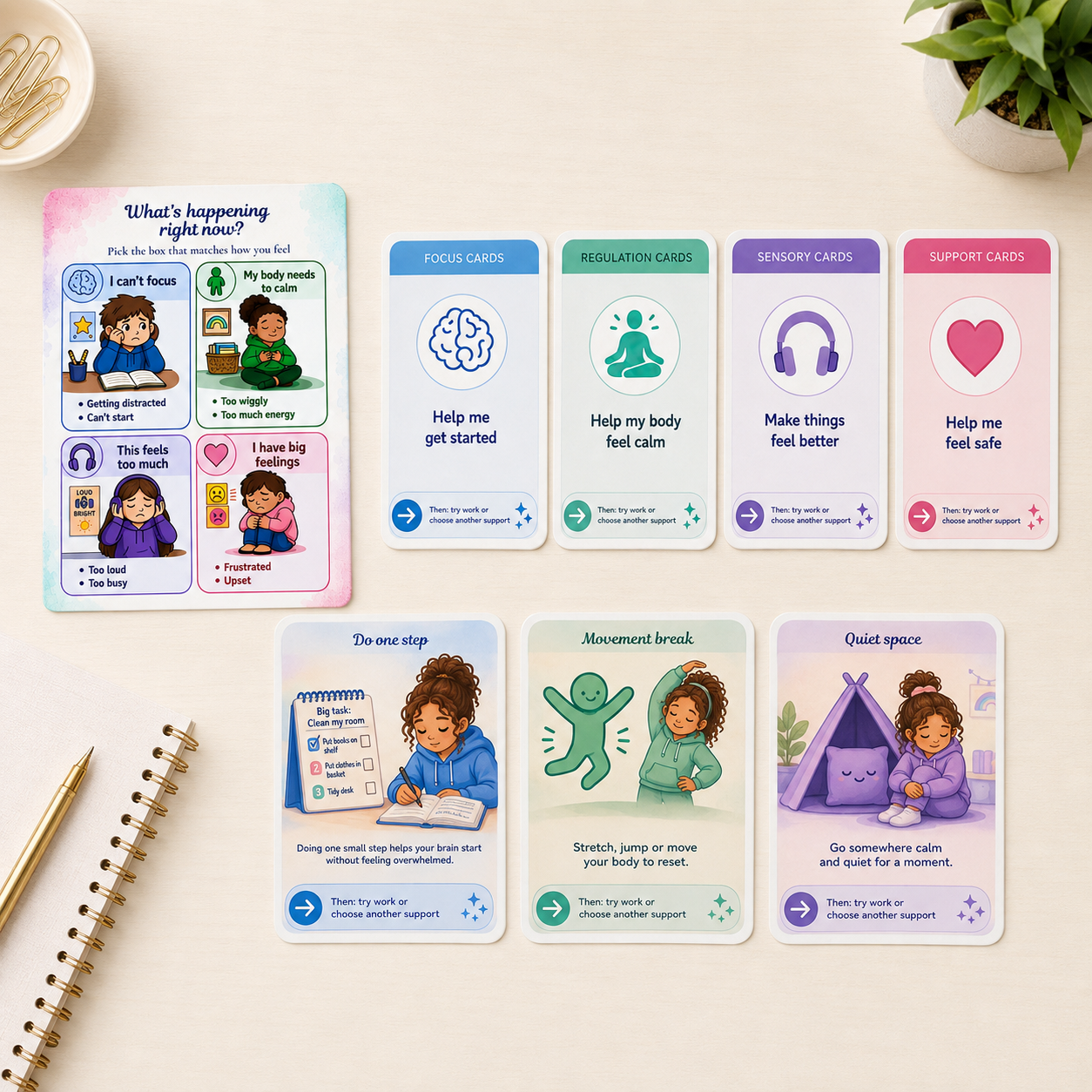
The Regulation Response System gives children a visual way to work through it.
Designed with Autistic children, children with ADHD and other neurodivergent children in mind, this child-led card system supports regulation, communication and executive functioning by helping children identify what's happening and choose a response that feels manageable for them.
How It Works
The system begins with:
“What’s happening now?”
From there, the child can explore different types of support depending on what their brain and body may need.
Rather than expecting them to remember a strategy, explain everything verbally or work out the next step completely on their own, the cards provide concrete visual options they can choose from.
Four Areas of Support
🔵 Focus & Start
For those moments when getting started feels impossible.
These cards provide visual options that can help reduce the executive functioning load around beginning, focusing and working out what comes next.
🟢 Movement
Sometimes the body needs to move before the brain is ready for anything else.
Movement options give children a way to recognise and respond to that need.
🟣 Sensory
For moments when sensory input may be contributing to overwhelm or when particular sensory input could feel regulating.
These cards provide concrete sensory options the child can explore.
🩷 Ask & Express
Sometimes the most important next step is communicating something.
These cards support children to express a need, ask for support or communicate what may be difficult to put into words.
Supporting Executive Function — Not Motivation
A child can want to do something and still be unable to get started.
They can know what they're supposed to do and still feel completely stuck.
They can know strategies that usually help and still be unable to remember or access them when they're overwhelmed.
That's where visual support can make a difference.
The Regulation Response System moves some of that thinking out of their head and onto the cards in front of them.
Instead of having to generate an answer from nothing, the child has options they can see, process and choose from.
Child-Led, Not Behaviour-Led
This isn't a reward system.
It isn't a consequence system.
And it isn't designed to make a child comply.
The child is the one using the system.
The goal is to give them greater access to their own regulation strategies, communication and choices — while adults can support without immediately taking over or deciding what the child “should” need.
Designed for Real Life
The Regulation Response System can be used:
At home.
In classrooms.
During homework or learning.
During transitions.
When getting started feels difficult.
During periods of overwhelm or dysregulation.
In regulation or sensory spaces.
During therapy and support sessions.
Anywhere a child may benefit from visual support to work out their next step.
Who It's For
Designed with Autistic children, children with ADHD and other neurodivergent children in mind, particularly children who experience challenges with executive functioning, regulation, sensory processing, communication or getting started.
Suitable for families, educators, education assistants, occupational therapists, psychologists, speech pathologists, support workers and other professionals supporting neurodivergent children.
Product Details
32 visual response cards.
Includes the “What’s happening now?” starting card.
Four colour-coded support areas:
🔵 Focus & Start
🟢 Movement
🟣 Sensory
🩷 Ask & Express
Practical visual format.
Designed for repeated use across home, school and therapy environments.
Because sometimes “I don't know what to do” isn't about not wanting to do anything.
Sometimes their brain needs the next step to become visible.
The Regulation Response System helps put those options in front of them. 🩵
Disclaimer: The Regulation Response System is an educational regulation, communication and executive function support resource. It is not intended to provide medical, psychological, therapeutic or diagnostic advice and does not replace individualised assessment, treatment or support from qualified health, education or allied health professionals. Regulation and executive functioning needs vary between children, and not every strategy or response will be appropriate for every child.
Neuro Nest Co.®
© 2026 Neuro Nest Co. All rights reserved. No part of this publication may be reproduced, stored in a retrieval system, or transmitted in any form or by any means without prior written permission from Neuro Nest Co.
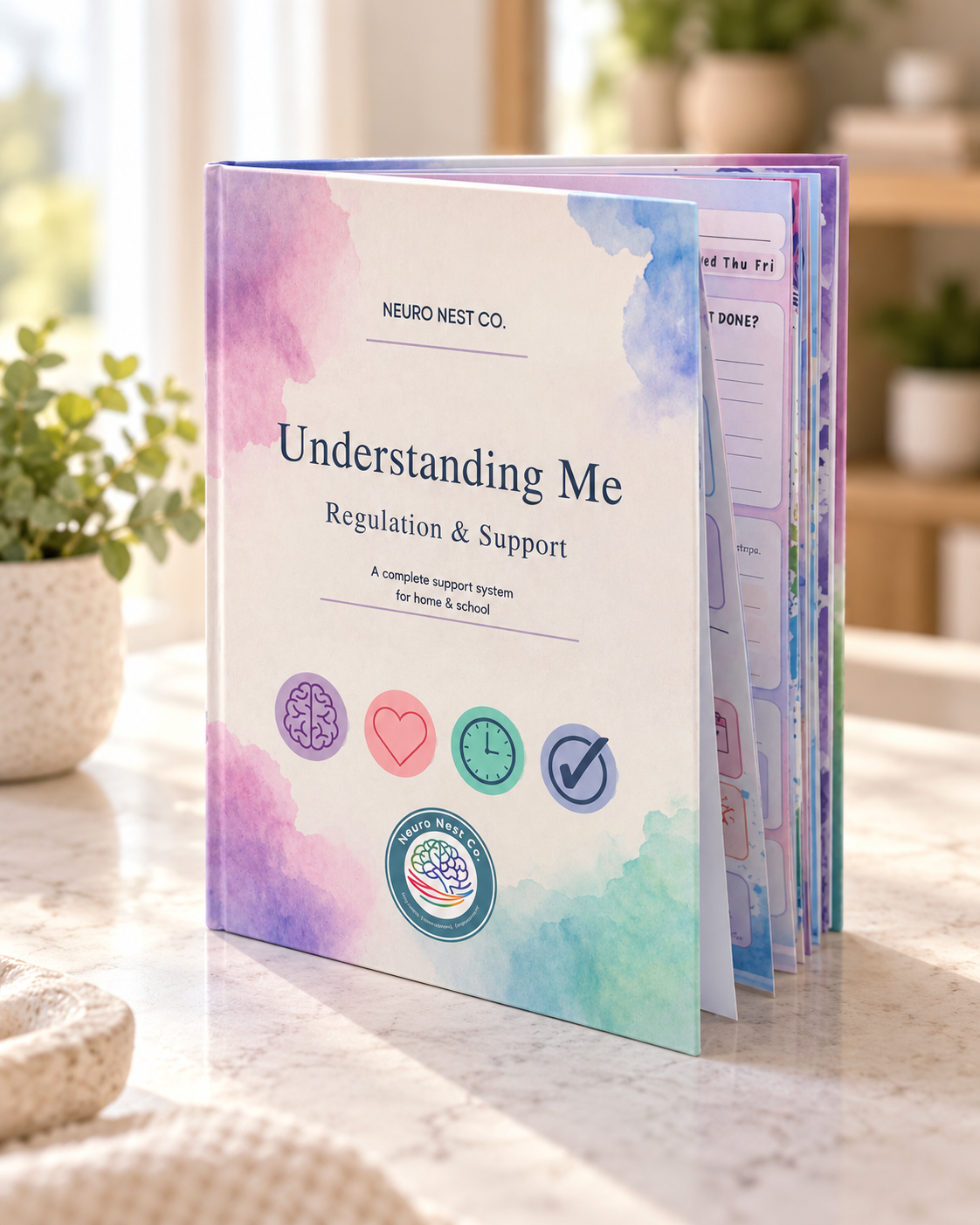
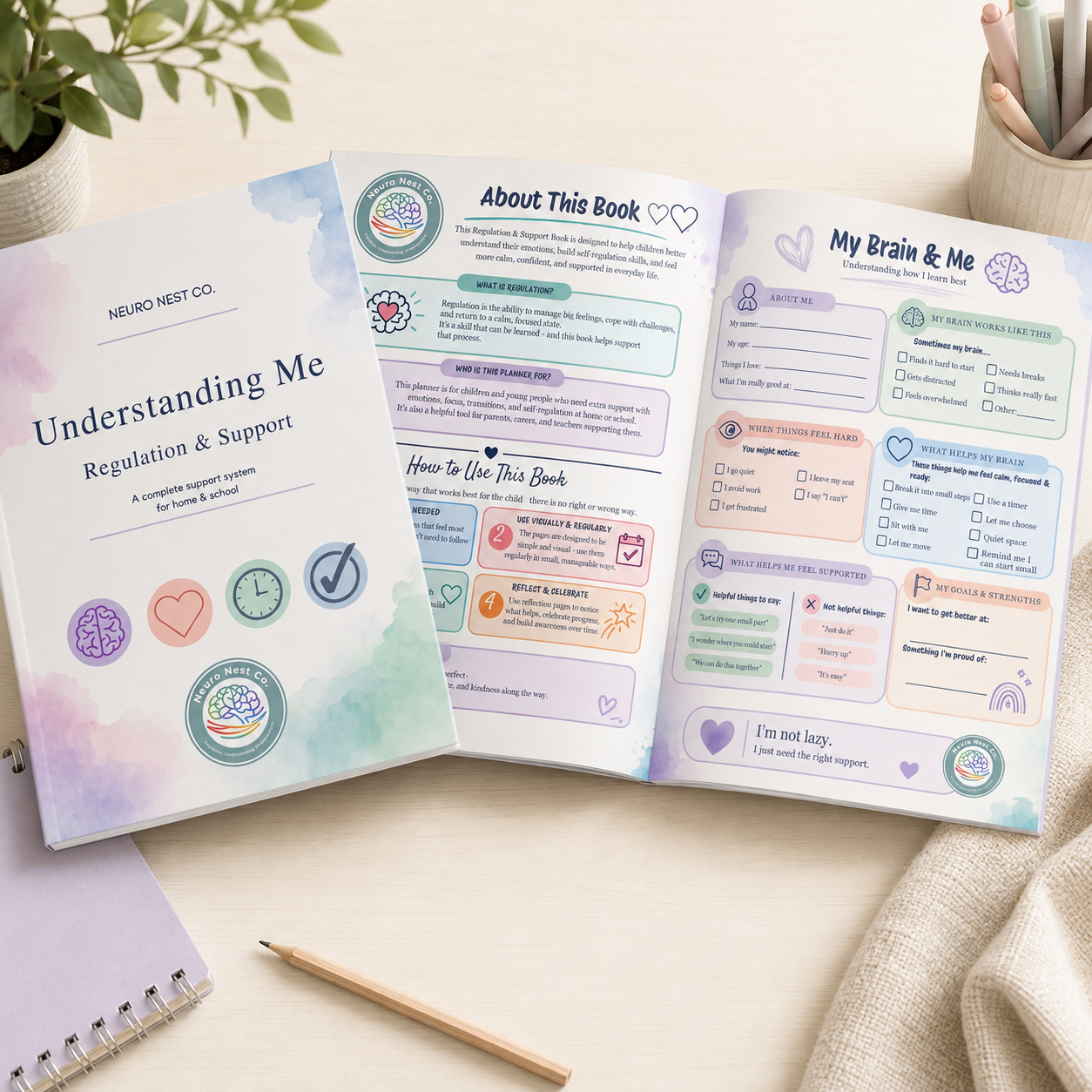
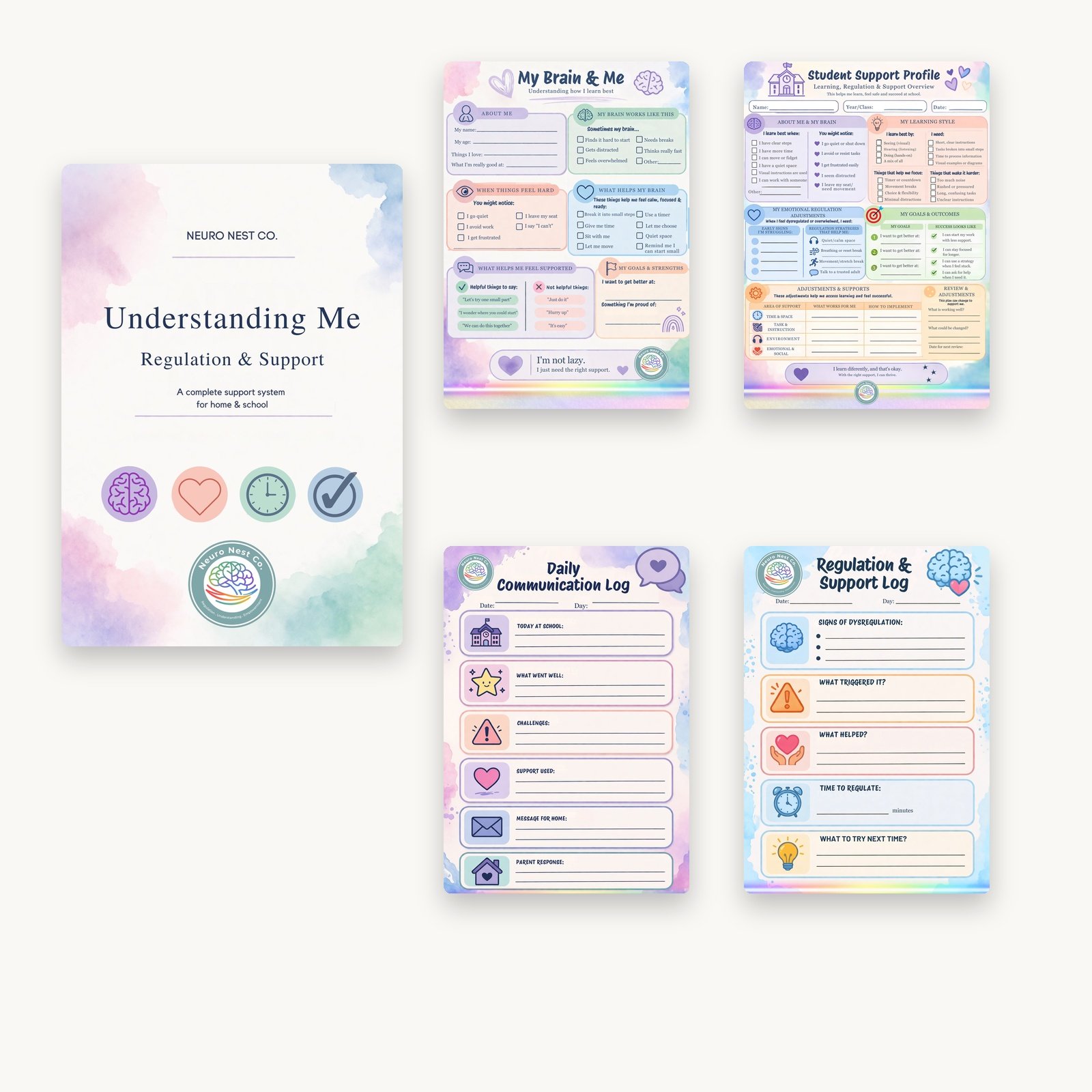
Understanding Me – Complete Home & School Support Book
Imagine if you didn’t have to explain your child from scratch every single time.
A new teacher.
A relief teacher.
A new education assistant.
A therapist changes.
A school meeting.
Another support person enters their life.
And once again, you find yourself explaining:
What helps.
What doesn’t.
What overwhelm looks like.
What might be happening underneath a behaviour.
How they communicate.
What they need when things are becoming too much.
And who they actually are beyond their hardest moments.
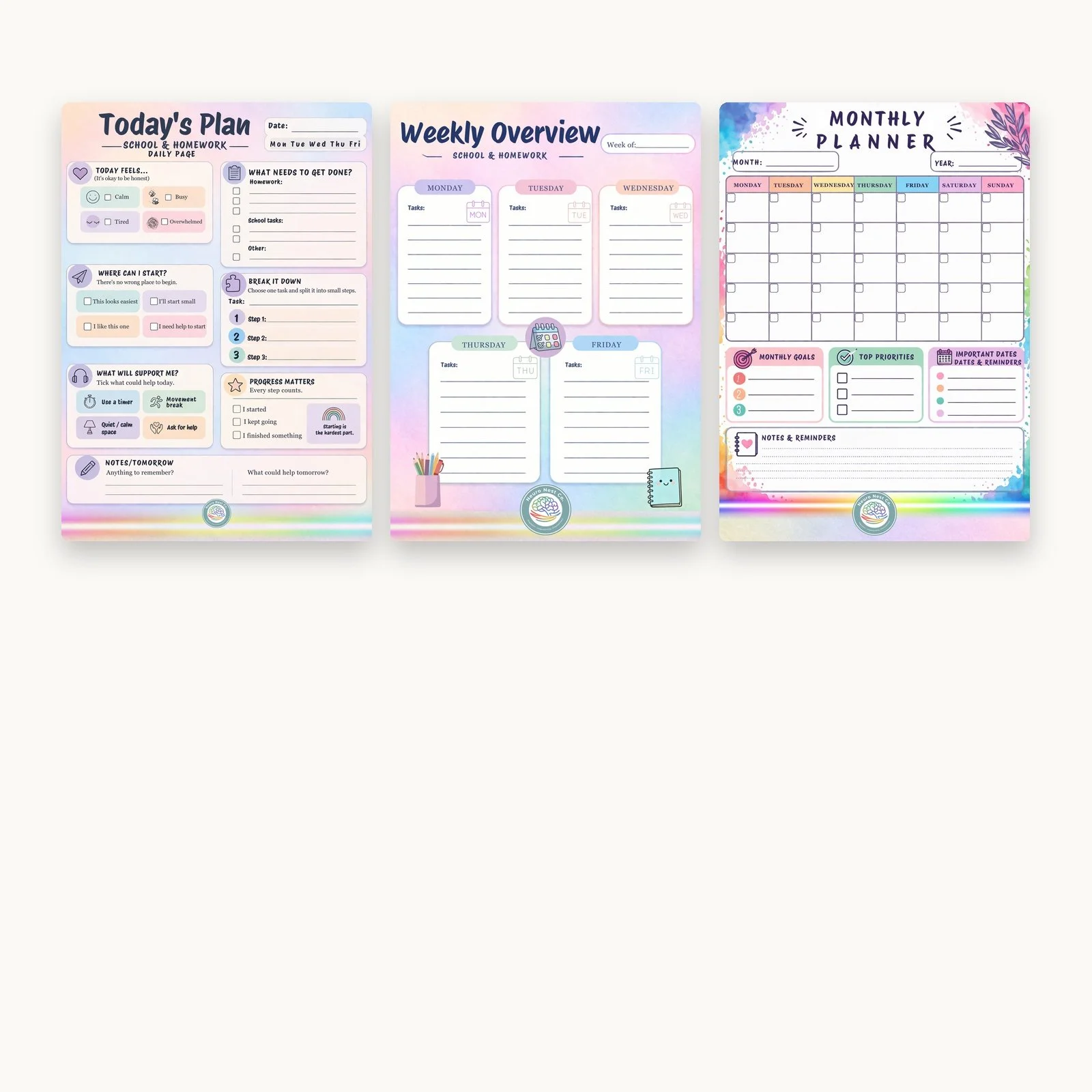
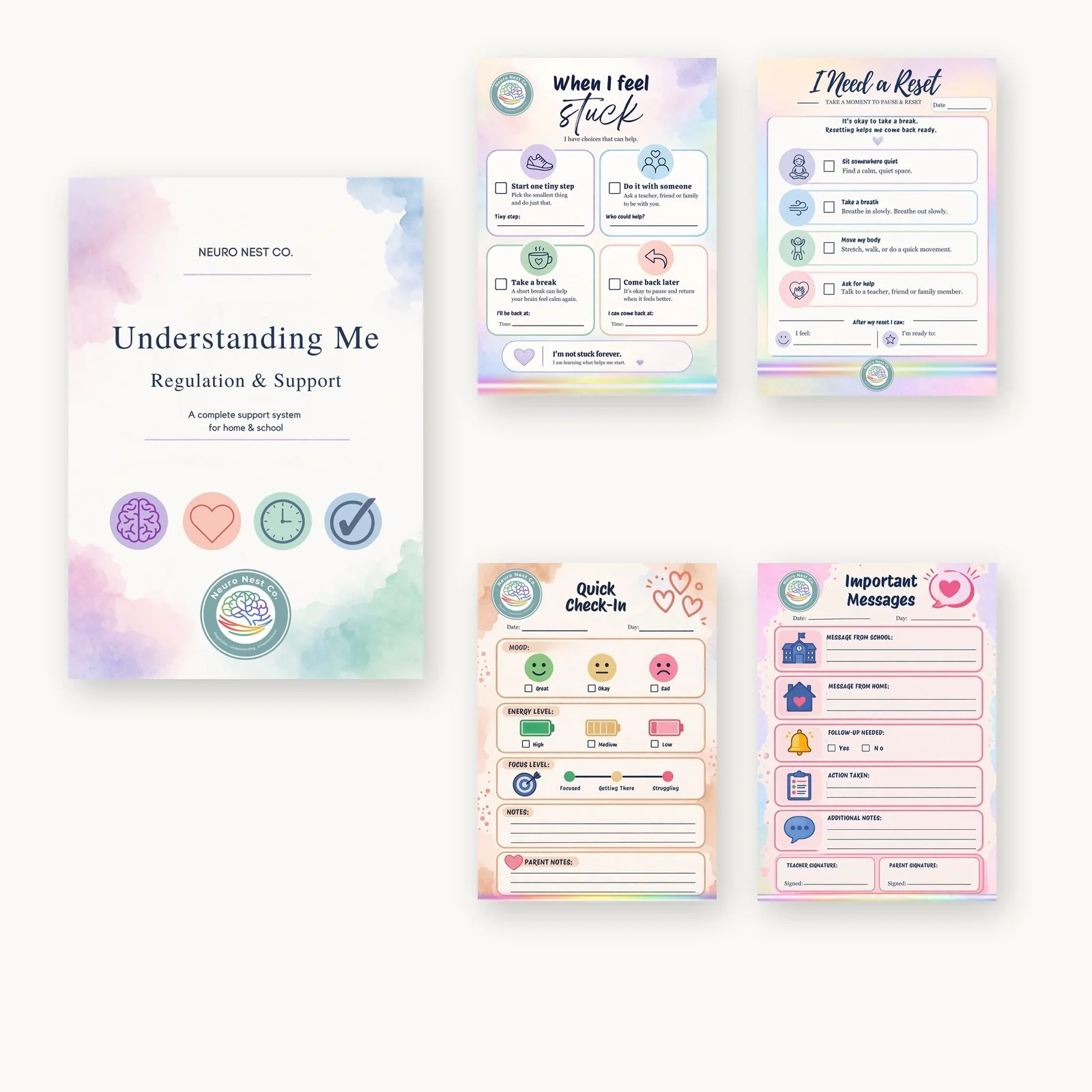
Understanding Me was created to bring that information together in one practical place.
Designed for Autistic children, children with ADHD and other neurodivergent children, this comprehensive home and school support book helps families document the information the adults supporting their child actually need to know.
Not just diagnoses.
Not just behaviours.
The whole child.
More Than a Student Profile
Understanding Me isn't something you complete once and forget about.
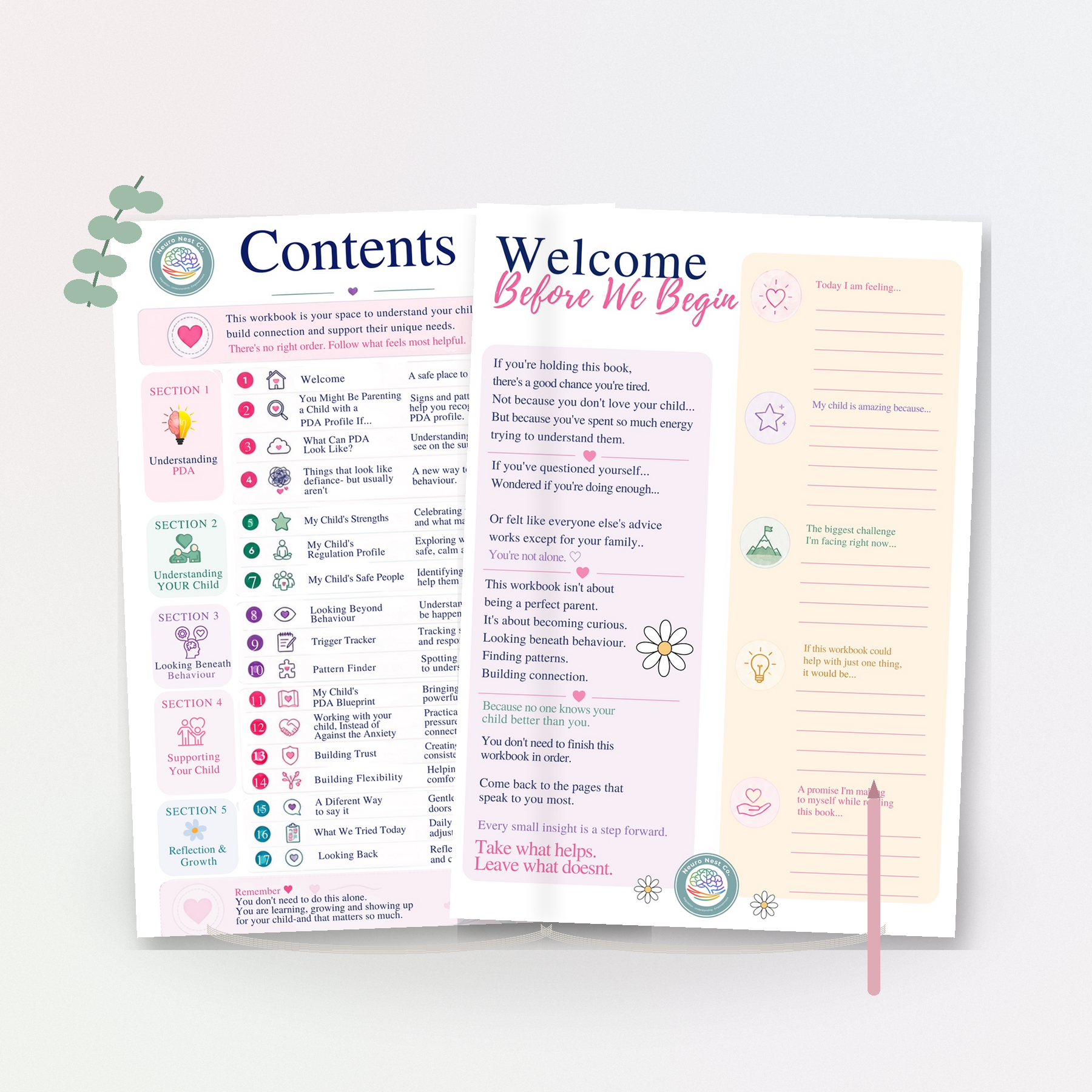
It's designed to become an ongoing record of your child's needs, strengths, communication, regulation and support across home and school.
It gives families and support teams a shared place to document what they're noticing, what's helping, what isn't working and what may need to change.
Because when everyone understands the child better, we're not constantly starting from zero.
Inside Understanding Me
About Me & My Brain
Help the people supporting your child understand who they are — including their strengths, interests, preferences, communication and individual needs.
Student Support Profile
Bring important information together so teachers, education assistants and other support people have something practical to refer back to.
Quick Strategy Guide
Document the approaches and supports that help your child, particularly during challenging or overwhelming moments.
Regulation & Support Logs
Look beyond what happened and start noticing patterns around regulation, environment, demands, sensory needs and support.
Home & School Communication
Create greater continuity between the adults supporting your child across different environments.
Strength-Based Goals
Keep goals focused on supporting development while recognising the child's strengths, individuality and needs.
Review & Reflection
Record what's changing, what's working and what may need to be adjusted over time.
Important Messages
A dedicated place for information that shouldn't get lost between meetings, classrooms, support people or busy days.
Looking Beyond Behaviour
One of the biggest reasons I created Understanding Me was because a child's most difficult moment rarely tells the whole story.
A meltdown, shutdown, refusal, outburst or difficult interaction doesn't happen in isolation.
What happened beforehand?
Was something building throughout the day?
Was there a sensory trigger?
A misunderstanding?
A demand?
A transition?
Were they already running on empty?
What helped afterwards?
Understanding Me encourages the adults around a child to look beyond “What did they do?” and become curious about “What might have been happening for them?”
Supporting Consistency Between Home & School
Parents often hold an enormous amount of information about their child.
Teachers and educators see things families may not see at home.
Therapists may notice something different again.
Understanding Me helps bring those pieces together.
So when a new teacher, relief EA, therapist or support person steps in, you're not relying on a rushed conversation in a hallway to explain everything they need to know.
Who It's For
Designed for families of Autistic children, children with ADHD and other neurodivergent children, particularly those who benefit from individualised regulation, communication, sensory, learning or emotional support.
Understanding Me can support collaboration between:
Parents and caregivers.
Teachers and education assistants.
Schools and inclusion teams.
Occupational therapists.
Psychologists.
Speech pathologists.
Support workers.
Other allied health and support professionals.
Product Details
A4 complete home & school support book.
High-quality softcover.
Practical profiles, logs, communication and reflection pages.
Designed to be updated as your child grows and their needs change.
Suitable for use across home, school and therapy settings.
Your child shouldn't have to start from scratch every time the adult supporting them changes.
And you shouldn't have to keep explaining the same things over and over again.
Understanding Me helps keep the knowledge about your child with your child — where it belongs. 🩵
Disclaimer: Understanding Me is an educational support and communication resource only. It is not intended to provide medical, psychological, therapeutic or diagnostic advice and does not replace individualised assessment, support planning or advice from qualified health, education or allied health professionals. Every child has individual needs, and the information recorded within the book should be considered alongside their existing professional and educational supports where applicable.
Neuro Nest Co.®
© 2026 Neuro Nest Co. All rights reserved. No part of this publication may be reproduced, stored in a retrieval system, or transmitted in any form or by any means without prior written permission from Neuro Nest Co.


A simple, soft-touch pouch designed to keep everything in one place—cards, small tools, or everyday essentials.
Lightweight, flexible, and easy to carry, this is your grab-and-go option for school, outings, or daily use.
Finished in calming pastel tones and designed to feel good in little hands, it’s a practical add-on that makes organisation easier without adding overwhelm.
Perfect for storage of our Cards.
Supporting a child through big emotions can feel overwhelming.
In the middle of a difficult moment, it isn’t always easy to find the right words.
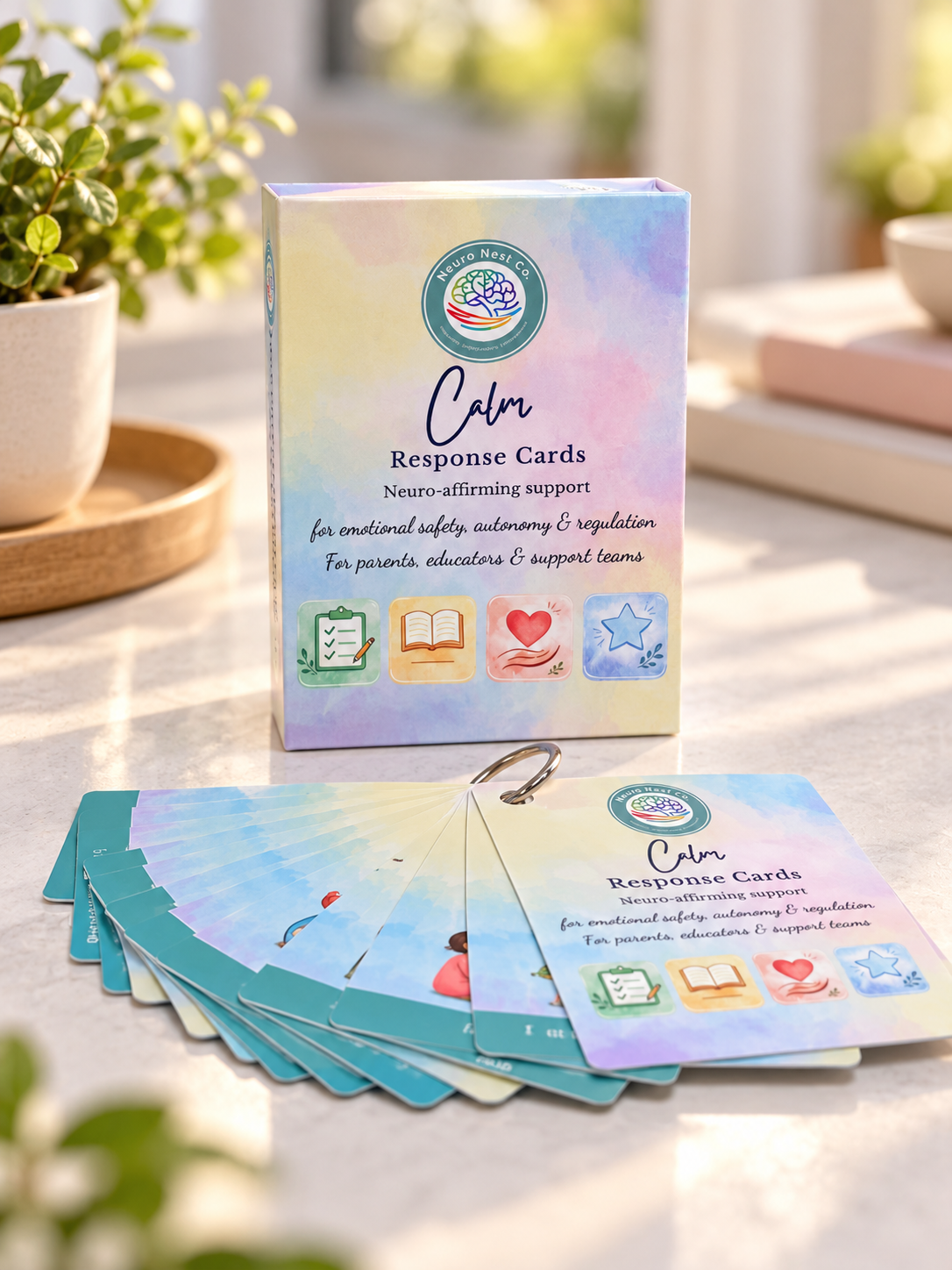
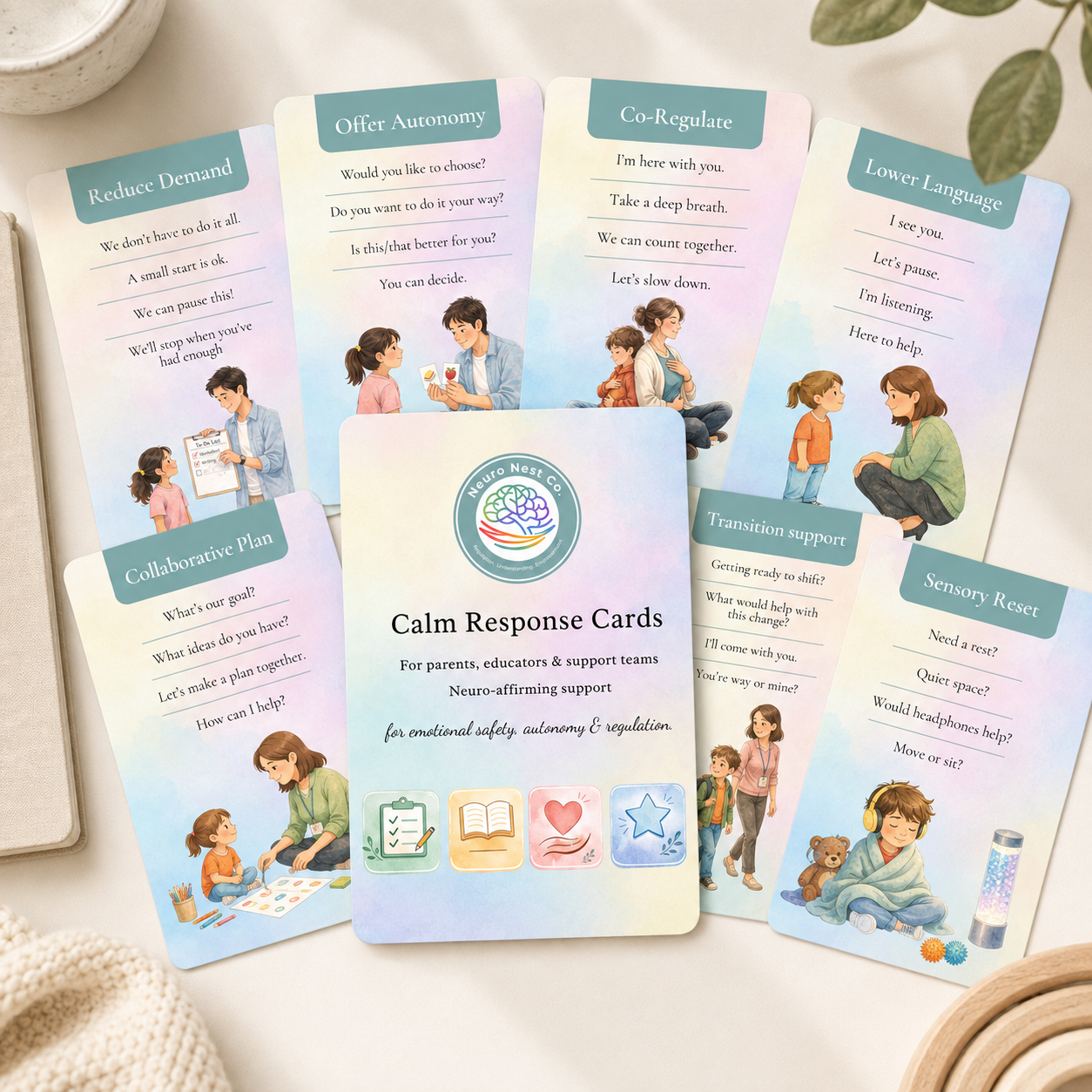
Calm Response Cards are designed to take the guesswork out of those moments.
Each card focuses on a common situation families and educators experience and provides multiple simple, supportive phrases you can use immediately.
Whether you’re helping a child through frustration, supporting a transition, repairing after conflict or encouraging collaboration, these cards can offer practical language that help keep connection at the centre.
Instead of wondering “What should I say right now?” you can simply reach for the card that best matches the situation.
What’s Included
This set includes 12 communication prompt cards, each covering a different aspect of supportive communication.
Each card includes several ready-to-use phrases that can be adapted to suit your child and the situation you’re navigating.
Why you may find them useful?
Unlike scripts that can feel unnatural or difficult to remember, Calm Response Cards are designed as a practical reference you can keep close by.
Use them:
During moments of frustration.
Before situations become difficult.
To help build confidence using supportive language.
To create consistency between home, school and therapy settings.
Over time, many adults can naturally begin incorporating these communication styles into everyday conversations.
Who Are They For?
Calm Response Cards are suitable for:
Parents and caregivers
Teachers
Education assistants
Early childhood educators
Therapists
Support workers
Grandparents and extended family
Please note: Calm Response Cards are educational communication resources designed to support everyday interactions. They are not medical devices and are not intended to diagnose, treat or replace professional advice.