 Image 1 of 3
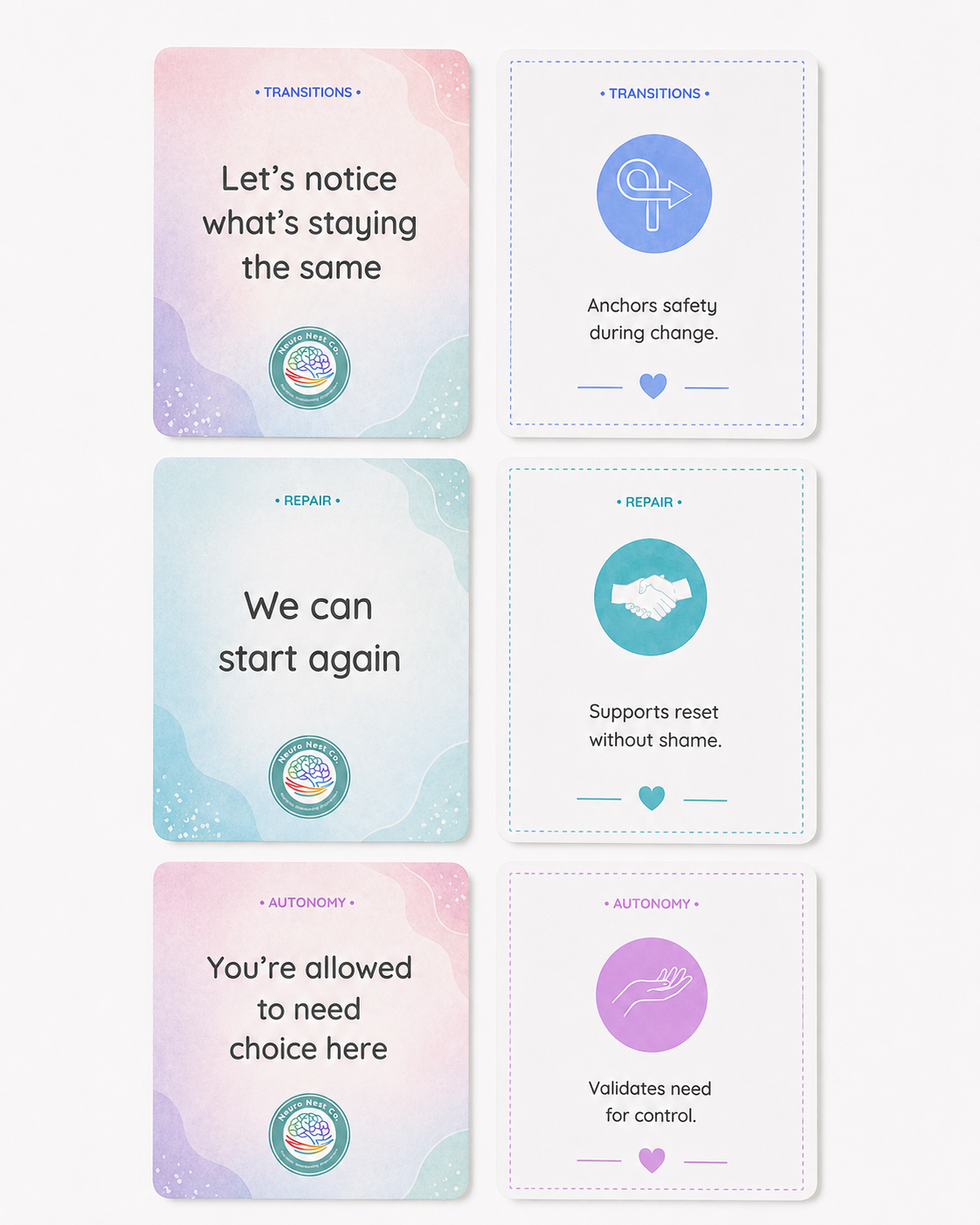 Image 2 of 3
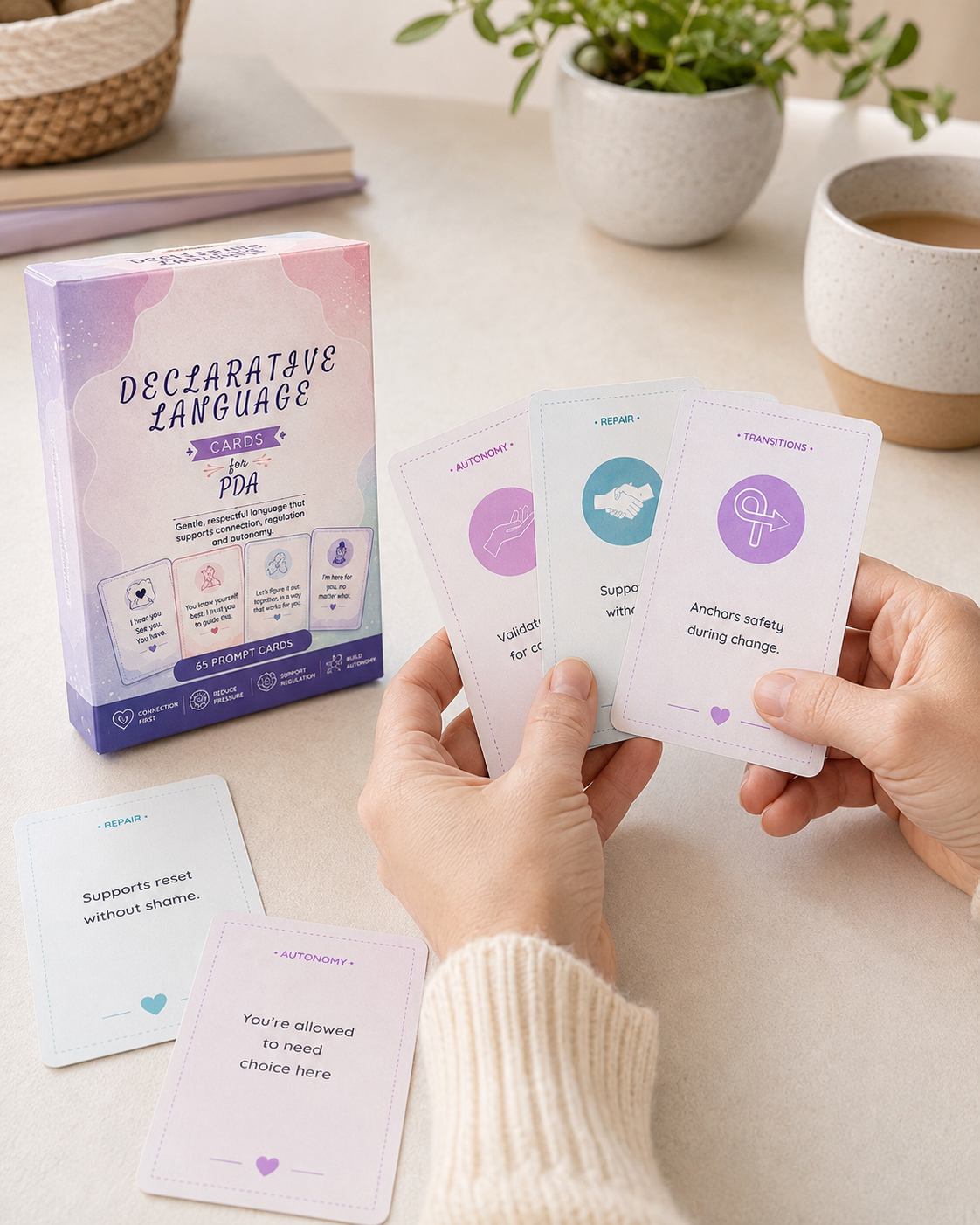 Image 3 of 3
You know you need to reduce the pressure.
You know direct demands can make things harder.
But what are you actually supposed to SAY instead?
That’s exactly where these cards come in.
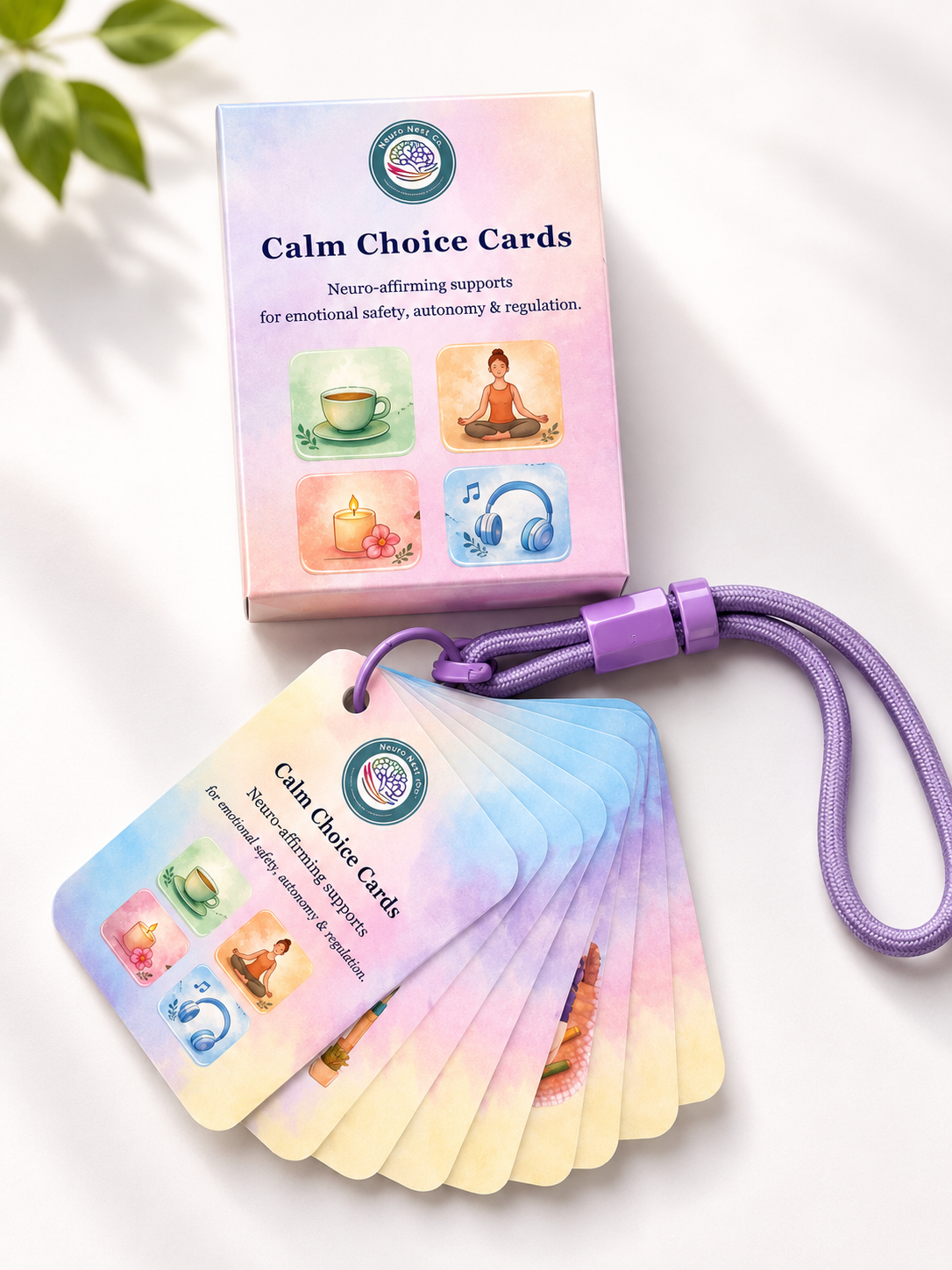
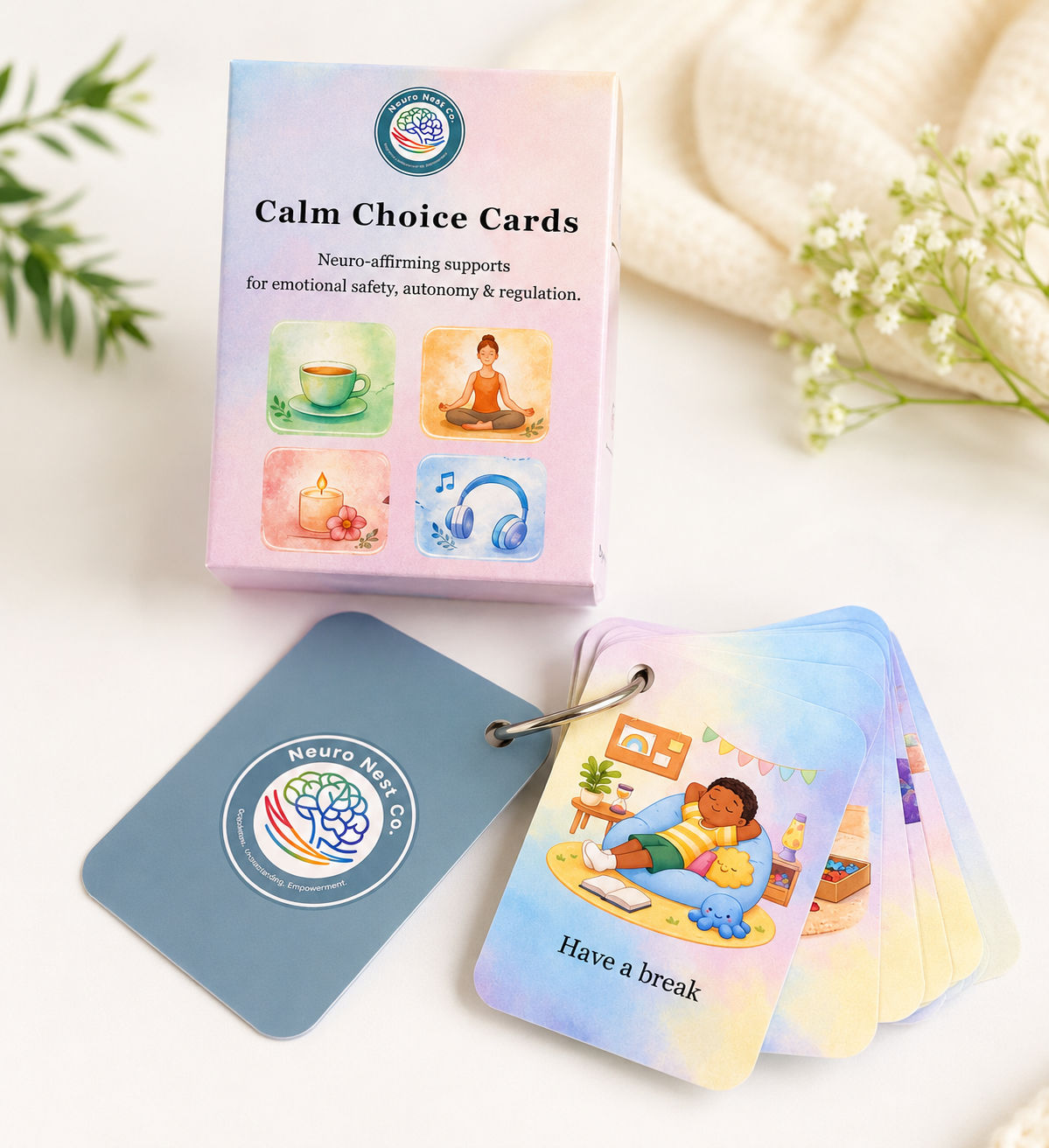
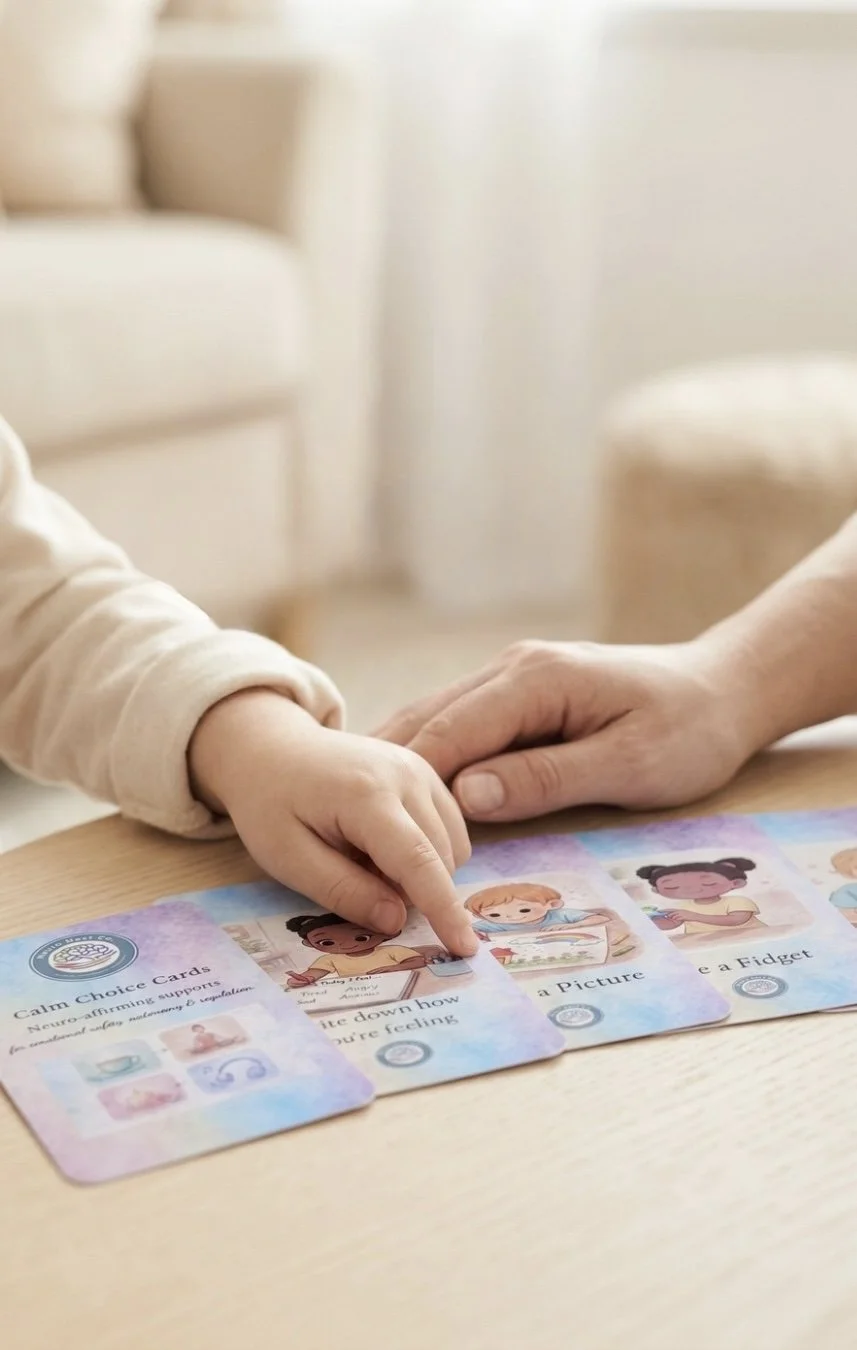
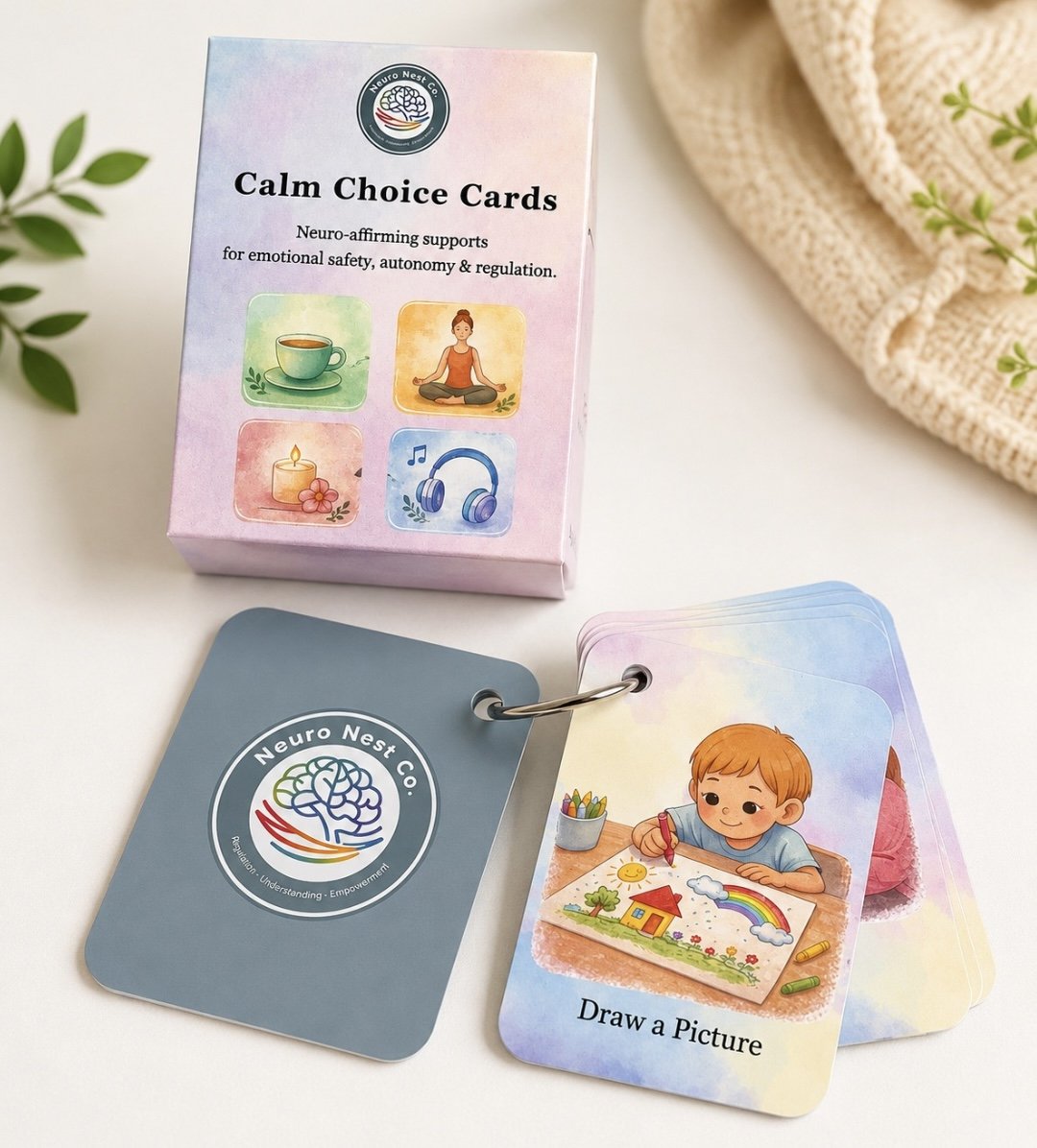
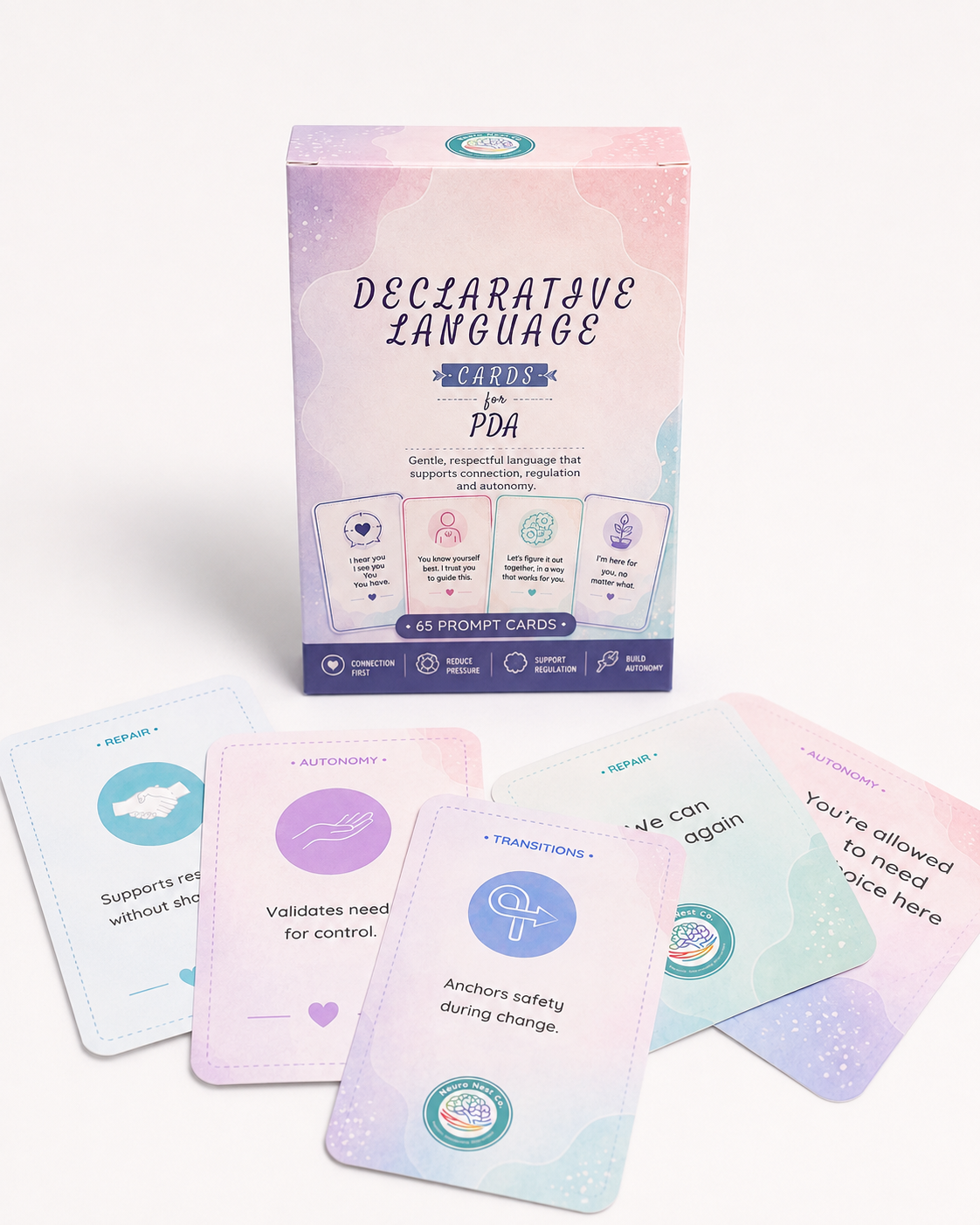
The PDA Declarative Language Prompt Cards are a practical, grab-and-use communication resource designed to help parents, educators and support professionals move away from constant instructions, questions and reminders — and towards language that supports autonomy, collaboration and connection.
Because declarative language isn't simply about swapping one sentence for another.
It’s learning how to communicate differently.
Inside the deck are 65 double-sided cards, each built around real, everyday situations. Rather than giving you a list of phrases to memorise, the cards help you understand what you could say, why it may help, and how you can apply the same approach in other situations.
So when you're standing there thinking:
“I know saying ‘Put your shoes on’ is getting us absolutely nowhere… but what do I say instead?”
You have something practical to reach for.
Each card includes a common everyday situation, a declarative language example, an explanation of why the approach may be helpful, and practical ideas you can start using straight away.
The goal isn't to disguise demands or find a nicer way to get compliance.
It's to help create communication that feels less pressuring, more collaborative and more respectful of autonomy — while giving the adults around the child the confidence to actually use declarative language in real life.
Perfect for home, classrooms, therapy settings and support teams, especially when multiple adults are trying to understand and use the same approach.
Because “use declarative language” is easy advice to give.
Knowing what that actually sounds like at 7:45am when nobody has shoes on is another story.
⸻
Please note: These cards are educational communication resources designed to support learning and everyday interactions.
They are not medical devices and are not intended to diagnose, treat or replace professional advice.
You know you need to reduce the pressure.
You know direct demands can make things harder.
But what are you actually supposed to SAY instead?
That’s exactly where these cards come in.
The PDA Declarative Language Prompt Cards are a practical, grab-and-use communication resource designed to help parents, educators and support professionals move away from constant instructions, questions and reminders — and towards language that supports autonomy, collaboration and connection.
Because declarative language isn't simply about swapping one sentence for another.
It’s learning how to communicate differently.
Inside the deck are 65 double-sided cards, each built around real, everyday situations. Rather than giving you a list of phrases to memorise, the cards help you understand what you could say, why it may help, and how you can apply the same approach in other situations.
So when you're standing there thinking:
“I know saying ‘Put your shoes on’ is getting us absolutely nowhere… but what do I say instead?”
You have something practical to reach for.
Each card includes a common everyday situation, a declarative language example, an explanation of why the approach may be helpful, and practical ideas you can start using straight away.
The goal isn't to disguise demands or find a nicer way to get compliance.
It's to help create communication that feels less pressuring, more collaborative and more respectful of autonomy — while giving the adults around the child the confidence to actually use declarative language in real life.
Perfect for home, classrooms, therapy settings and support teams, especially when multiple adults are trying to understand and use the same approach.
Because “use declarative language” is easy advice to give.
Knowing what that actually sounds like at 7:45am when nobody has shoes on is another story.
⸻
Please note: These cards are educational communication resources designed to support learning and everyday interactions.
They are not medical devices and are not intended to diagnose, treat or replace professional advice.